
The Brandformance Podcast

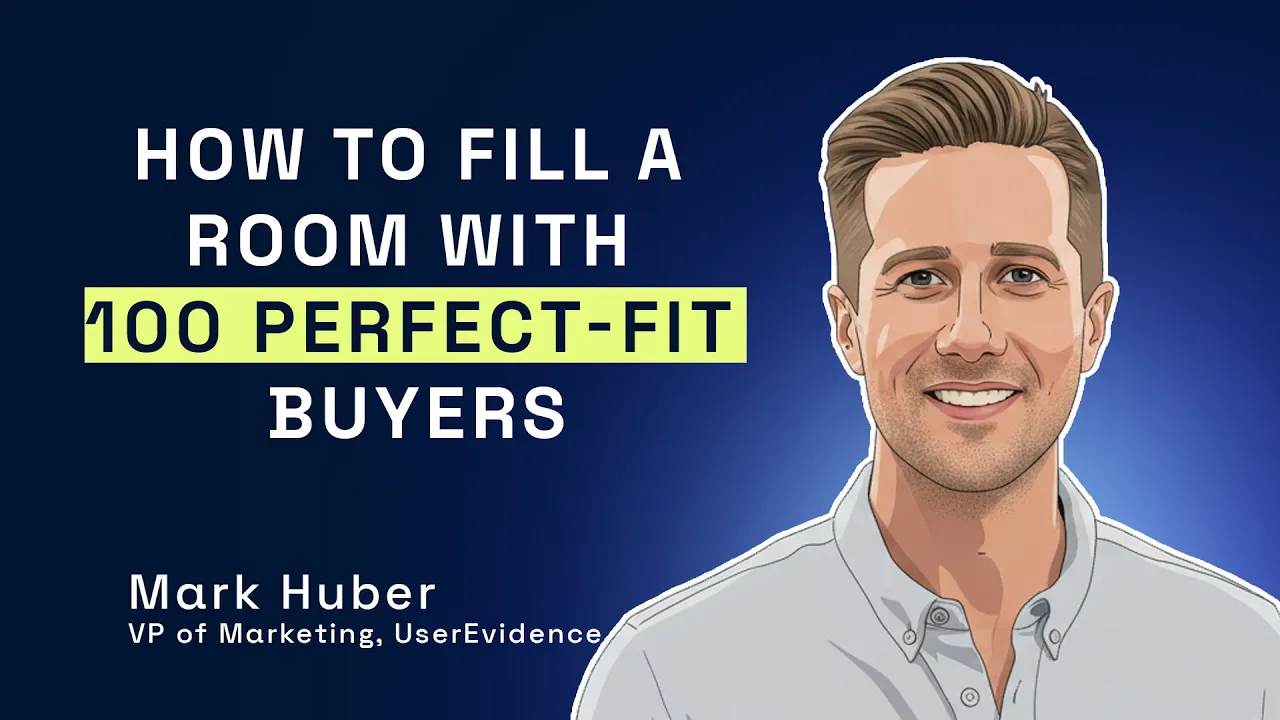
How UserEvidence’s first in-person event generated $2M+ in pipeline ft. Mark Huber

Or listen where you get your podcasts

Or listen where you get your podcasts

Episode Highlights

Transcript

Behind the expert

UserEvidence’s Mark Huber took six figures that used to go to other people’s conferences and built Highline, a tightly curated, wildly memorable B2B gathering in Jackson, Wyoming. From the invite math to day-one outdoor adventures to receipts your CFO will respect, here’s how he did it the first time with no prior in-person event under his belt.

In our conversation (full video here), Mark walks through the why, the how, and the receipts.

The gist

  • Own the room: Stop renting access. Host your own, so the ICP actually shows up.

  • Curate hard: Invite only, clear attendee mix, founders in outreach, and VIP treatment where it counts.

  • Design for bonding, then content: Shared outdoor experiences first, work sessions second.

  • Measure like you mean it: Pipeline goals set up front, bookings tracked over time, and a content flywheel from day one.

How Mark turned “sponsor dollars” into a flagship event

Start with a 'why' your founders can feel
After spending close to six figures sponsoring other people’s shows, Mark wasn’t seeing enough in-house buyers. 

The pitch: take that budget and build something purpose-built for their ICP. He socialized the idea one founder at a time, leading with conviction and a simple bet: if they owned the guest list, they could own the outcomes.

As he put it, “We had spent, I think it was close to a hundred grand in total in event sponsorships in 2024.” The alternative was to “put on our own event.”

Lock the brief, then the venue, then the speakers
He wrote a tight brief with internal objectives, attendee outcomes, and an ideal mix: roughly 40 target prospects, 30 in-pipeline deals, 30 customers. Jackson Hole was the hook, but logistics are real. 

“We were trying to lock in the venue for weeks and almost probably like two-ish months,” he said. In fact, “We technically did not have the venue locked in and the date locked in until late February.” Only then did formal promotion launch in April for an August event.

Curate with intent and remove friction
First year, invite only with an application backstop to hedge demand risk. UserEvidence covered the entire on-site experience and selectively paid travel for VIP prospects and key customers. 

“We made the decision to cover the entire cost of the event while people were there,” Mark said. That generosity creates its own challenges; a few day-of no-shows stung because no ticket meant no sunk cost for attendees. Still, it helped land exactly who they wanted.

Engineer connection before content
Day one was outside on purpose: wildlife tours, river floats, whitewater, and a VIP horseback ride for top accounts.

“We wanted to get people outside and we wanted people to see nature, wanted them to touch grass.” The point was shared experience, not slide decks. It worked. 

By the time everyone rode the gondola for content day, conversations were already warm, and the roundtables hit deeper because people had already met for real.

Count the right things and report on a cadence
Mark aligned success measures with the founders before invites went out: sourced stage one pipeline, qualified stage two pipeline, and influenced renewals and upsells. 

He promised receipts at 30, 90, 180, and 365 days, not just the week after. The headline many leaders asked for anyway was bookings. Those came too, along with revived late-stage deals and a stockpile of video to fuel months of distribution.

Budget with eyes open, then refine
Year one all-in landed around 325–330K, including partners, some paid travel, and one very premium trail ride. 

“It was very stressful. It was stressful the entire time until I got there.” The learning list is clear: fewer activities to simplify logistics, more time for peer roundtables, a firmer date that avoids back-to-school, and possibly light ticketing or limited sponsors to share cost without breaking the vibe. The one thing that won’t change is the cap around 100 people. “The number of attendees is really what made this so special.”

What Mark Huber said

  • “What if we didn’t sponsor any of these events in the following year and what if we put on our own event?”

  • “I had never hosted an in-person event before.”

  • “This was the first year that we got marketing moving.”

  • “We made the decision to cover the entire cost of the event while people were there… That generosity creates its own challenges.”

Why this matters

If your team keeps coming home from third-party shows with lots of selfies and not enough sales, the problem may be the room, not the reps. Owning a focused, invite-only event lets you control who attends, how they connect, and how you measure progress over months, not days. 

It's a heavier lift and higher upfront cost, but when you define success early and build the content engine around it, the payback compounds.

Practical next steps

  • Write the brief: Objectives, attendee promise, and the exact mix of customers, in-pipeline deals, and target prospects. Get founder and finance sign-off now.

  • Pick a place that sells itself: Lock the venue early, then build your speaker slate and promotion around the setting and the cap.

  • Go invite only with an application safety net: Enlist founders and AEs in outreach, and pre-decide which VIPs get travel covered.

  • Lead with experiences, follow with work: Day one for bonding, day two for roundtables and talks. Film everything with a plan to publish.

  • Set pipeline goals you can live with: Stage one, stage two, and renewal/upsell influence. Report at 30, 90, 180, and 365 days.

  • Budget like a realist: Model the full cost. If you need to trim, reduce activities before you increase headcount. Consider a light ticket or two curated sponsors to offset year two.

Want a deeper look at the planning, attendee mix, costs, and results we covered? Check out the Office Hours deck from our conversation with Mark.

Episode Highlights

Transcript

Behind the expert

UserEvidence’s Mark Huber took six figures that used to go to other people’s conferences and built Highline, a tightly curated, wildly memorable B2B gathering in Jackson, Wyoming. From the invite math to day-one outdoor adventures to receipts your CFO will respect, here’s how he did it the first time with no prior in-person event under his belt.

In our conversation (full video here), Mark walks through the why, the how, and the receipts.

The gist

  • Own the room: Stop renting access. Host your own, so the ICP actually shows up.

  • Curate hard: Invite only, clear attendee mix, founders in outreach, and VIP treatment where it counts.

  • Design for bonding, then content: Shared outdoor experiences first, work sessions second.

  • Measure like you mean it: Pipeline goals set up front, bookings tracked over time, and a content flywheel from day one.

How Mark turned “sponsor dollars” into a flagship event

Start with a 'why' your founders can feel
After spending close to six figures sponsoring other people’s shows, Mark wasn’t seeing enough in-house buyers. 

The pitch: take that budget and build something purpose-built for their ICP. He socialized the idea one founder at a time, leading with conviction and a simple bet: if they owned the guest list, they could own the outcomes.

As he put it, “We had spent, I think it was close to a hundred grand in total in event sponsorships in 2024.” The alternative was to “put on our own event.”

Lock the brief, then the venue, then the speakers
He wrote a tight brief with internal objectives, attendee outcomes, and an ideal mix: roughly 40 target prospects, 30 in-pipeline deals, 30 customers. Jackson Hole was the hook, but logistics are real. 

“We were trying to lock in the venue for weeks and almost probably like two-ish months,” he said. In fact, “We technically did not have the venue locked in and the date locked in until late February.” Only then did formal promotion launch in April for an August event.

Curate with intent and remove friction
First year, invite only with an application backstop to hedge demand risk. UserEvidence covered the entire on-site experience and selectively paid travel for VIP prospects and key customers. 

“We made the decision to cover the entire cost of the event while people were there,” Mark said. That generosity creates its own challenges; a few day-of no-shows stung because no ticket meant no sunk cost for attendees. Still, it helped land exactly who they wanted.

Engineer connection before content
Day one was outside on purpose: wildlife tours, river floats, whitewater, and a VIP horseback ride for top accounts.

“We wanted to get people outside and we wanted people to see nature, wanted them to touch grass.” The point was shared experience, not slide decks. It worked. 

By the time everyone rode the gondola for content day, conversations were already warm, and the roundtables hit deeper because people had already met for real.

Count the right things and report on a cadence
Mark aligned success measures with the founders before invites went out: sourced stage one pipeline, qualified stage two pipeline, and influenced renewals and upsells. 

He promised receipts at 30, 90, 180, and 365 days, not just the week after. The headline many leaders asked for anyway was bookings. Those came too, along with revived late-stage deals and a stockpile of video to fuel months of distribution.

Budget with eyes open, then refine
Year one all-in landed around 325–330K, including partners, some paid travel, and one very premium trail ride. 

“It was very stressful. It was stressful the entire time until I got there.” The learning list is clear: fewer activities to simplify logistics, more time for peer roundtables, a firmer date that avoids back-to-school, and possibly light ticketing or limited sponsors to share cost without breaking the vibe. The one thing that won’t change is the cap around 100 people. “The number of attendees is really what made this so special.”

What Mark Huber said

  • “What if we didn’t sponsor any of these events in the following year and what if we put on our own event?”

  • “I had never hosted an in-person event before.”

  • “This was the first year that we got marketing moving.”

  • “We made the decision to cover the entire cost of the event while people were there… That generosity creates its own challenges.”

Why this matters

If your team keeps coming home from third-party shows with lots of selfies and not enough sales, the problem may be the room, not the reps. Owning a focused, invite-only event lets you control who attends, how they connect, and how you measure progress over months, not days. 

It's a heavier lift and higher upfront cost, but when you define success early and build the content engine around it, the payback compounds.

Practical next steps

  • Write the brief: Objectives, attendee promise, and the exact mix of customers, in-pipeline deals, and target prospects. Get founder and finance sign-off now.

  • Pick a place that sells itself: Lock the venue early, then build your speaker slate and promotion around the setting and the cap.

  • Go invite only with an application safety net: Enlist founders and AEs in outreach, and pre-decide which VIPs get travel covered.

  • Lead with experiences, follow with work: Day one for bonding, day two for roundtables and talks. Film everything with a plan to publish.

  • Set pipeline goals you can live with: Stage one, stage two, and renewal/upsell influence. Report at 30, 90, 180, and 365 days.

  • Budget like a realist: Model the full cost. If you need to trim, reduce activities before you increase headcount. Consider a light ticket or two curated sponsors to offset year two.

Want a deeper look at the planning, attendee mix, costs, and results we covered? Check out the Office Hours deck from our conversation with Mark.

Episode Highlights

Transcript

Behind the expert

UserEvidence’s Mark Huber took six figures that used to go to other people’s conferences and built Highline, a tightly curated, wildly memorable B2B gathering in Jackson, Wyoming. From the invite math to day-one outdoor adventures to receipts your CFO will respect, here’s how he did it the first time with no prior in-person event under his belt.

In our conversation (full video here), Mark walks through the why, the how, and the receipts.

The gist

  • Own the room: Stop renting access. Host your own, so the ICP actually shows up.

  • Curate hard: Invite only, clear attendee mix, founders in outreach, and VIP treatment where it counts.

  • Design for bonding, then content: Shared outdoor experiences first, work sessions second.

  • Measure like you mean it: Pipeline goals set up front, bookings tracked over time, and a content flywheel from day one.

How Mark turned “sponsor dollars” into a flagship event

Start with a 'why' your founders can feel
After spending close to six figures sponsoring other people’s shows, Mark wasn’t seeing enough in-house buyers. 

The pitch: take that budget and build something purpose-built for their ICP. He socialized the idea one founder at a time, leading with conviction and a simple bet: if they owned the guest list, they could own the outcomes.

As he put it, “We had spent, I think it was close to a hundred grand in total in event sponsorships in 2024.” The alternative was to “put on our own event.”

Lock the brief, then the venue, then the speakers
He wrote a tight brief with internal objectives, attendee outcomes, and an ideal mix: roughly 40 target prospects, 30 in-pipeline deals, 30 customers. Jackson Hole was the hook, but logistics are real. 

“We were trying to lock in the venue for weeks and almost probably like two-ish months,” he said. In fact, “We technically did not have the venue locked in and the date locked in until late February.” Only then did formal promotion launch in April for an August event.

Curate with intent and remove friction
First year, invite only with an application backstop to hedge demand risk. UserEvidence covered the entire on-site experience and selectively paid travel for VIP prospects and key customers. 

“We made the decision to cover the entire cost of the event while people were there,” Mark said. That generosity creates its own challenges; a few day-of no-shows stung because no ticket meant no sunk cost for attendees. Still, it helped land exactly who they wanted.

Engineer connection before content
Day one was outside on purpose: wildlife tours, river floats, whitewater, and a VIP horseback ride for top accounts.

“We wanted to get people outside and we wanted people to see nature, wanted them to touch grass.” The point was shared experience, not slide decks. It worked. 

By the time everyone rode the gondola for content day, conversations were already warm, and the roundtables hit deeper because people had already met for real.

Count the right things and report on a cadence
Mark aligned success measures with the founders before invites went out: sourced stage one pipeline, qualified stage two pipeline, and influenced renewals and upsells. 

He promised receipts at 30, 90, 180, and 365 days, not just the week after. The headline many leaders asked for anyway was bookings. Those came too, along with revived late-stage deals and a stockpile of video to fuel months of distribution.

Budget with eyes open, then refine
Year one all-in landed around 325–330K, including partners, some paid travel, and one very premium trail ride. 

“It was very stressful. It was stressful the entire time until I got there.” The learning list is clear: fewer activities to simplify logistics, more time for peer roundtables, a firmer date that avoids back-to-school, and possibly light ticketing or limited sponsors to share cost without breaking the vibe. The one thing that won’t change is the cap around 100 people. “The number of attendees is really what made this so special.”

What Mark Huber said

  • “What if we didn’t sponsor any of these events in the following year and what if we put on our own event?”

  • “I had never hosted an in-person event before.”

  • “This was the first year that we got marketing moving.”

  • “We made the decision to cover the entire cost of the event while people were there… That generosity creates its own challenges.”

Why this matters

If your team keeps coming home from third-party shows with lots of selfies and not enough sales, the problem may be the room, not the reps. Owning a focused, invite-only event lets you control who attends, how they connect, and how you measure progress over months, not days. 

It's a heavier lift and higher upfront cost, but when you define success early and build the content engine around it, the payback compounds.

Practical next steps

  • Write the brief: Objectives, attendee promise, and the exact mix of customers, in-pipeline deals, and target prospects. Get founder and finance sign-off now.

  • Pick a place that sells itself: Lock the venue early, then build your speaker slate and promotion around the setting and the cap.

  • Go invite only with an application safety net: Enlist founders and AEs in outreach, and pre-decide which VIPs get travel covered.

  • Lead with experiences, follow with work: Day one for bonding, day two for roundtables and talks. Film everything with a plan to publish.

  • Set pipeline goals you can live with: Stage one, stage two, and renewal/upsell influence. Report at 30, 90, 180, and 365 days.

  • Budget like a realist: Model the full cost. If you need to trim, reduce activities before you increase headcount. Consider a light ticket or two curated sponsors to offset year two.

Want a deeper look at the planning, attendee mix, costs, and results we covered? Check out the Office Hours deck from our conversation with Mark.

Sign-up. Stay Sharp

Get the latest podcasts, new content drops, and fresh insights.

By submitting this form you agree to our privacy policy.

Discover how Paramark analyzed $2.2B+ in marketing spend

By providing your contact info, you agree to receive communications from Paramark. You can opt-out at any time. For details, refer to our Privacy Policy.

See Paramark in action

See Paramark in action

See Paramark in action

Demystify marketing measurement & growth

Marketing trends and tactics, plus the latest insights, experiments, and content drops from Paramark. Written by our CEO, delivered straight to your inbox. Sign up. Stay sharp.

By providing your contact info, you agree to receive communications from Paramark. You can opt-out at any time. For details, refer to our Privacy Policy

© 2026 Paramark, Inc.

Demystify marketing measurement & growth

Marketing trends and tactics, plus the latest insights, experiments, and content drops from Paramark. Written by our CEO, delivered straight to your inbox. Sign up. Stay sharp.

By providing your contact info, you agree to receive communications from Paramark. You can opt-out at any time. For details, refer to our Privacy Policy

© 2026 Paramark, Inc.

Demystify marketing measurement & growth

Marketing trends and tactics, plus the latest insights, experiments, and content drops from Paramark. Written by our CEO, delivered straight to your inbox. Sign up. Stay sharp.

By providing your contact info, you agree to receive communications from Paramark. You can opt-out at any time. For details, refer to our Privacy Policy

© 2026 Paramark, Inc.