A PARAMARK PODCAST

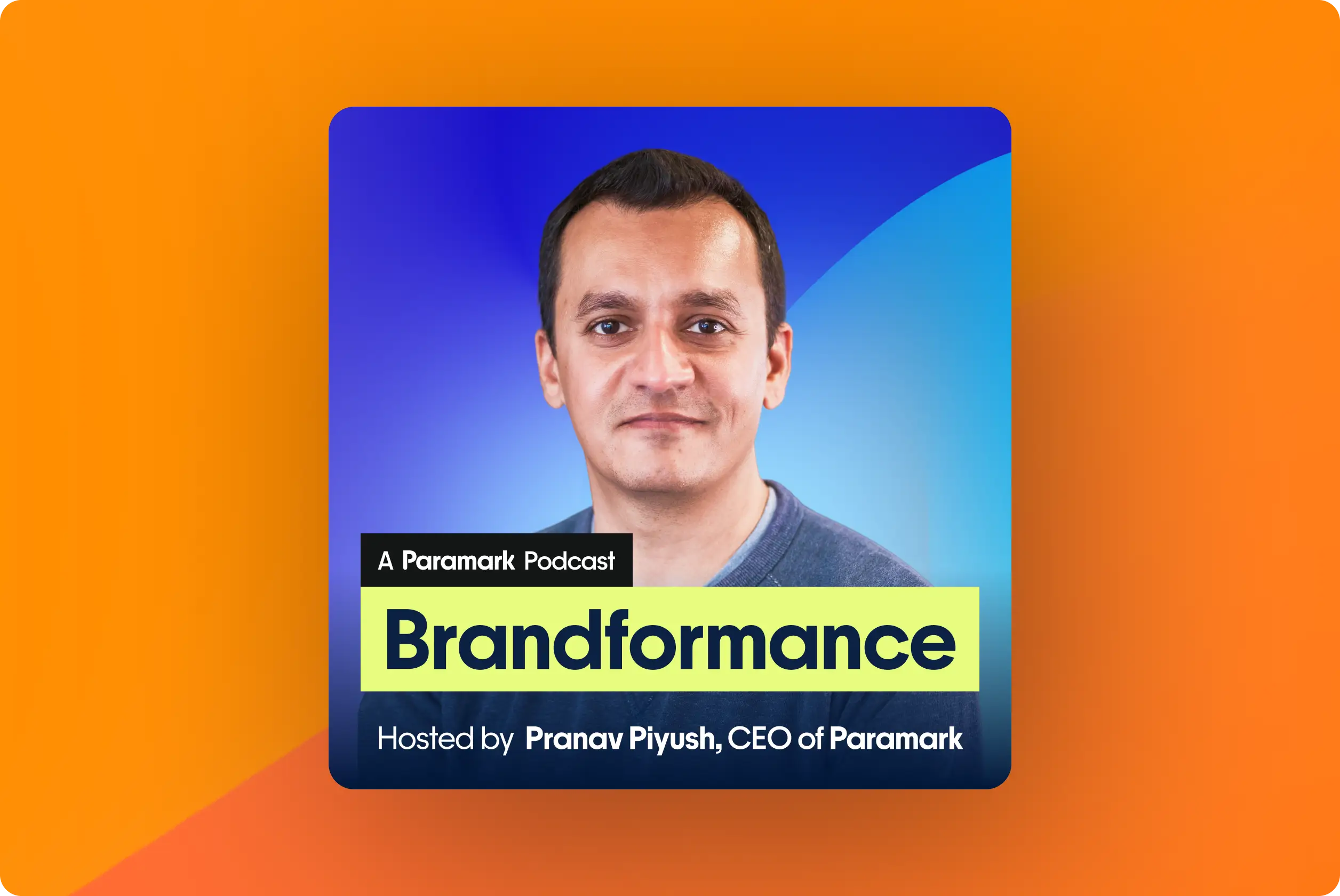
Brandformance

Brandformance is a behind-the-scenes look inside the minds of today’s most transformational CMOs and VPs of Marketing. Hosted by Paramark CEO Pranav Piyush, global marketing leaders go beyond buzzwords and share how they approach brand and performance marketing, what measurement strategies they rely on, and how they really feel about AI, human creativity, and the future of marketing.

A PARAMARK PODCAST

Brandformance

Brandformance is a behind-the-scenes look inside the minds of today’s most transformational CMOs and VPs of Marketing. Hosted by Paramark CEO Pranav Piyush, global marketing leaders go beyond buzzwords and share how they approach brand and performance marketing, what measurement strategies they rely on, and how they really feel about AI, human creativity, and the future of marketing.

A PARAMARK PODCAST

Brandformance

Brandformance is a behind-the-scenes look inside the minds of today’s most transformational CMOs and VPs of Marketing. Hosted by Paramark CEO Pranav Piyush, global marketing leaders go beyond buzzwords and share how they approach brand and performance marketing, what measurement strategies they rely on, and how they really feel about AI, human creativity, and the future of marketing.

Latest episodes

Latest episodes

Latest episodes

In this episode, we dig into how Daniel Brady applies machine learning and neuroscience to a problem most email marketers underestimate: not what to say, but who is actually ready to hear it. He shares how Orita helped a brand make more money by emailing 40% fewer people, why deliverability is a high-stakes risk channel and not a cheap one, and why personalization only moves the needle in the middle of your CRM list. Along the way, Daniel makes the case that surprise and habituation are more useful marketing frameworks than most people realize, and shares where he wants to take ML next: data-driven decisions about billboards and sponsorships. About the guest: Daniel Brady is the co-CEO of Orita, an ML-powered platform that helps e-commerce brands get more out of their existing customer lists through smarter targeting and experimentation. Before Orita, he trained as a neuroscientist at Harvard and went on to work as a machine learning engineer in routing and logistics. He brings a hard science lens to lifecycle marketing, making sophisticated experimentation accessible to brands with no data science team.

In this episode, we dig into how Daniel Brady applies machine learning and neuroscience to a problem most email marketers underestimate: not what to say, but who is actually ready to hear it. He shares how Orita helped a brand make more money by emailing 40% fewer people, why deliverability is a high-stakes risk channel and not a cheap one, and why personalization only moves the needle in the middle of your CRM list. Along the way, Daniel makes the case that surprise and habituation are more useful marketing frameworks than most people realize, and shares where he wants to take ML next: data-driven decisions about billboards and sponsorships. About the guest: Daniel Brady is the co-CEO of Orita, an ML-powered platform that helps e-commerce brands get more out of their existing customer lists through smarter targeting and experimentation. Before Orita, he trained as a neuroscientist at Harvard and went on to work as a machine learning engineer in routing and logistics. He brings a hard science lens to lifecycle marketing, making sophisticated experimentation accessible to brands with no data science team.

In this episode, we dig into how Daniel Brady applies machine learning and neuroscience to a problem most email marketers underestimate: not what to say, but who is actually ready to hear it. He shares how Orita helped a brand make more money by emailing 40% fewer people, why deliverability is a high-stakes risk channel and not a cheap one, and why personalization only moves the needle in the middle of your CRM list. Along the way, Daniel makes the case that surprise and habituation are more useful marketing frameworks than most people realize, and shares where he wants to take ML next: data-driven decisions about billboards and sponsorships. About the guest: Daniel Brady is the co-CEO of Orita, an ML-powered platform that helps e-commerce brands get more out of their existing customer lists through smarter targeting and experimentation. Before Orita, he trained as a neuroscientist at Harvard and went on to work as a machine learning engineer in routing and logistics. He brings a hard science lens to lifecycle marketing, making sophisticated experimentation accessible to brands with no data science team.

In this episode, Tim Doyle makes the case that attribution systems create false precision and that the real job of marketing is moving people from one state to another. He talks through how Eucalyptus found early wins by spotting mispriced channels before anyone else, from long-form YouTube to outdoor to Grindr. He's also pretty skeptical of Meta's self-reported incrementality, and explains why this moment, more than any before it, rewards people who are good at ideas. About the guest: Tim Doyle is the CEO of Eucalyptus, the Australian health and wellness company behind brands including Juniper, Pilot, and Software, which was acquired by Hims & Hers in early 2026. He grew up in marketing before moving into the CEO role and brings an unusually hands-on perspective on measurement, creative strategy, and capital allocation. He is one of the few CEOs who can credibly hold both the marketing and finance conversation at once.

In this episode, Tim Doyle makes the case that attribution systems create false precision and that the real job of marketing is moving people from one state to another. He talks through how Eucalyptus found early wins by spotting mispriced channels before anyone else, from long-form YouTube to outdoor to Grindr. He's also pretty skeptical of Meta's self-reported incrementality, and explains why this moment, more than any before it, rewards people who are good at ideas. About the guest: Tim Doyle is the CEO of Eucalyptus, the Australian health and wellness company behind brands including Juniper, Pilot, and Software, which was acquired by Hims & Hers in early 2026. He grew up in marketing before moving into the CEO role and brings an unusually hands-on perspective on measurement, creative strategy, and capital allocation. He is one of the few CEOs who can credibly hold both the marketing and finance conversation at once.

In this episode, Tim Doyle makes the case that attribution systems create false precision and that the real job of marketing is moving people from one state to another. He talks through how Eucalyptus found early wins by spotting mispriced channels before anyone else, from long-form YouTube to outdoor to Grindr. He's also pretty skeptical of Meta's self-reported incrementality, and explains why this moment, more than any before it, rewards people who are good at ideas. About the guest: Tim Doyle is the CEO of Eucalyptus, the Australian health and wellness company behind brands including Juniper, Pilot, and Software, which was acquired by Hims & Hers in early 2026. He grew up in marketing before moving into the CEO role and brings an unusually hands-on perspective on measurement, creative strategy, and capital allocation. He is one of the few CEOs who can credibly hold both the marketing and finance conversation at once.

In this episode, we dig into how Patrick Moran thinks about growth marketing as a discipline rooted in unit economics, not just distribution. He shares how he approaches CAC, LTV, and incrementality as a shared language across marketing, product, and finance, why finding your anchor channel matters more than testing ten at once, and what it took for Netflix to rebuild its brand after Quickster. Along the way, Patrick reflects on the Yik Yak failure and what it taught him about the limits of marketing when product-market fit breaks down. About the guest: Patrick Moran is the VP of Marketing at SoFi, the personal finance company. Before SoFi, he held senior marketing and growth roles at Robinhood, Spotify, Netflix, and Yik Yak. He brings a distinctly financial lens to growth marketing, with a track record of building marketing organizations inside companies navigating major transitions.

In this episode, we dig into how Patrick Moran thinks about growth marketing as a discipline rooted in unit economics, not just distribution. He shares how he approaches CAC, LTV, and incrementality as a shared language across marketing, product, and finance, why finding your anchor channel matters more than testing ten at once, and what it took for Netflix to rebuild its brand after Quickster. Along the way, Patrick reflects on the Yik Yak failure and what it taught him about the limits of marketing when product-market fit breaks down. About the guest: Patrick Moran is the VP of Marketing at SoFi, the personal finance company. Before SoFi, he held senior marketing and growth roles at Robinhood, Spotify, Netflix, and Yik Yak. He brings a distinctly financial lens to growth marketing, with a track record of building marketing organizations inside companies navigating major transitions.

In this episode, we dig into how Patrick Moran thinks about growth marketing as a discipline rooted in unit economics, not just distribution. He shares how he approaches CAC, LTV, and incrementality as a shared language across marketing, product, and finance, why finding your anchor channel matters more than testing ten at once, and what it took for Netflix to rebuild its brand after Quickster. Along the way, Patrick reflects on the Yik Yak failure and what it taught him about the limits of marketing when product-market fit breaks down. About the guest: Patrick Moran is the VP of Marketing at SoFi, the personal finance company. Before SoFi, he held senior marketing and growth roles at Robinhood, Spotify, Netflix, and Yik Yak. He brings a distinctly financial lens to growth marketing, with a track record of building marketing organizations inside companies navigating major transitions.

In this episode, we dig into how Nicole Baer thinks about B2B marketing as an emotional discipline, not a rational one. She shares how she rebuilt Carta's brand through customer storytelling, why brand investment shouldn't be sacrificed for performance marketing, and how AI is reshaping Carta's go-to-market from sales call analysis to synthetic market research. Along the way, Nicole reflects on launching a product during the pandemic at Logitech, the philosophy of "specificity" she and Carta's CEO use to guide creative decisions, and what she'd do with unlimited budget and a full-bore OOH experiment. About the guest: Nicole Baer is the CMO at Carta, the ERP for private capital, where she leads brand, demand generation, content, and go-to-market. Before Carta, she held CMO and senior marketing roles at Logitech, Zendesk, and Aon Hewitt. She is known for her belief that B2B marketing is just as emotional as consumer marketing and for building brand strategies that earn affinity rather than just attention.

In this episode, we dig into how Nicole Baer thinks about B2B marketing as an emotional discipline, not a rational one. She shares how she rebuilt Carta's brand through customer storytelling, why brand investment shouldn't be sacrificed for performance marketing, and how AI is reshaping Carta's go-to-market from sales call analysis to synthetic market research. Along the way, Nicole reflects on launching a product during the pandemic at Logitech, the philosophy of "specificity" she and Carta's CEO use to guide creative decisions, and what she'd do with unlimited budget and a full-bore OOH experiment. About the guest: Nicole Baer is the CMO at Carta, the ERP for private capital, where she leads brand, demand generation, content, and go-to-market. Before Carta, she held CMO and senior marketing roles at Logitech, Zendesk, and Aon Hewitt. She is known for her belief that B2B marketing is just as emotional as consumer marketing and for building brand strategies that earn affinity rather than just attention.

In this episode, we dig into how Nicole Baer thinks about B2B marketing as an emotional discipline, not a rational one. She shares how she rebuilt Carta's brand through customer storytelling, why brand investment shouldn't be sacrificed for performance marketing, and how AI is reshaping Carta's go-to-market from sales call analysis to synthetic market research. Along the way, Nicole reflects on launching a product during the pandemic at Logitech, the philosophy of "specificity" she and Carta's CEO use to guide creative decisions, and what she'd do with unlimited budget and a full-bore OOH experiment. About the guest: Nicole Baer is the CMO at Carta, the ERP for private capital, where she leads brand, demand generation, content, and go-to-market. Before Carta, she held CMO and senior marketing roles at Logitech, Zendesk, and Aon Hewitt. She is known for her belief that B2B marketing is just as emotional as consumer marketing and for building brand strategies that earn affinity rather than just attention.

Load More

Discover how Paramark analyzed $2.2B+ in marketing spend

By providing your contact info, you agree to receive communications from Paramark. You can opt-out at any time. For details, refer to our Privacy Policy.

See Paramark in action

Demystify marketing measurement & growth

Marketing trends and tactics, plus the latest insights, experiments, and content drops from Paramark. Written by our CEO, delivered straight to your inbox. Sign up. Stay sharp.

By providing your contact info, you agree to receive communications from Paramark. You can opt-out at any time. For details, refer to our Privacy Policy

Demystify marketing measurement & growth

Marketing trends and tactics, plus the latest insights, experiments, and content drops from Paramark. Written by our CEO, delivered straight to your inbox. Sign up. Stay sharp.

By providing your contact info, you agree to receive communications from Paramark. You can opt-out at any time. For details, refer to our Privacy Policy

Demystify marketing measurement & growth

Marketing trends and tactics, plus the latest insights, experiments, and content drops from Paramark. Written by our CEO, delivered straight to your inbox. Sign up. Stay sharp.

By providing your contact info, you agree to receive communications from Paramark. You can opt-out at any time. For details, refer to our Privacy Policy