Episode Highlights
Transcript
Expert Highlight
Behind the expert
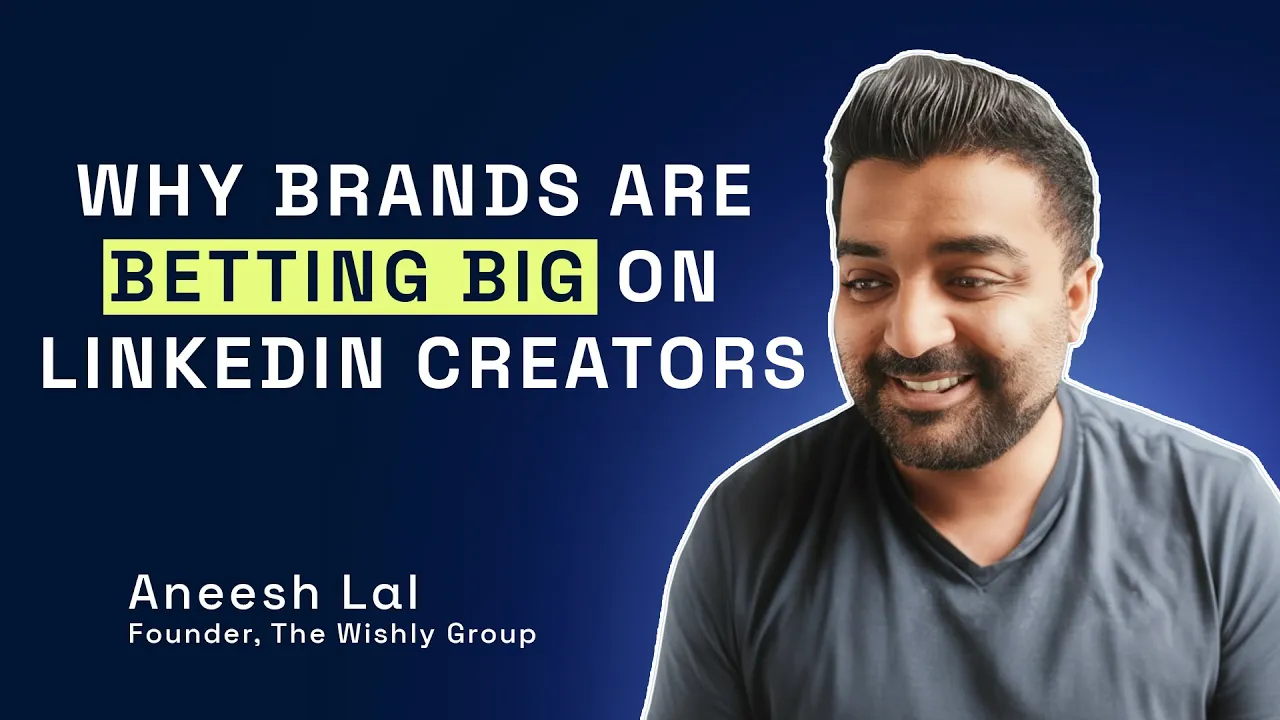
Aneesh Lal, founder of the Wishly Group, represents 40+ B2B creators on LinkedIn and runs 100+ influencer campaigns per month for 60 brands. In just one year, he scaled from 6 creators and 15 monthly campaigns to become LinkedIn's go-to talent agency, achieving a 90% client renewal rate. Previously the agency rep for Pinterest Canada with deep media sales experience across enterprise brands, he brings a unique combination of platform knowledge, community building, and media strategy to the emerging B2B influencer space. In this conversation, he breaks down why LinkedIn is the next frontier for social media marketing, how to vet authentic creators, and what the algorithm actually rewards right now.
The gist
LinkedIn is undersaturated: Only 2% of 1 billion users post content vs. Instagram's creator oversaturation.
Trust accelerates sales: Subject matter expertise speeds cycles from 6 months to 4 months through water-cooler credibility.
Vet with 3 C's: Credibility (deep expertise, not curation), Charisma (attract + retain), Character (off-camera behavior).
Go multi-channel, multi-month: 8-9 activations over 3 months (posts, newsletter, webinar, co-authored assets) beats one-off posts.
Know the algorithm: 3-week lookback window, rotating format favor (single image text hot now, video throttled, carousels coming back).
How Aneesh builds campaigns that convert and renew
Start with positioning, not popularity
Before Wishly pitches a creator, they map the client's category challenges. What preconceived notions hurt you? What strengths get overlooked? Then they match creators whose organic content naturally amplifies the good or dispels the myths.
Example: If prospects think your tool is "impossible to use" (like Clay), find creators who make complexity approachable. Follower count matters less than message-market fit.
Vet creators with the 3 C's framework
Entry requires referral from an existing roster member. Then the diligence begins:
Credibility: Can they go 2-3 levels deep when questioned? Curators who summarize five articles don't make the cut. "There's utility, but you're not gonna be good for what we sell."
Charisma: Growth + engagement over time. "Your ability to attract and retain, the second half is very important."
Character: "What are you like when the cameras are off?" Aneesh calls his network of 60 brands and 40 creators. Three independent negative reports = no deal, regardless of stats.
Build frequency into the deal structure
Marketers believe in frequency for ads but forget it for influencers. Aneesh refuses one-off posts: "That would save your money. Don't even do it because it is the most unpredictable algorithm out there."
Standard package: 3 months, 8-9 activations including monthly LinkedIn posts, monthly newsletter blasts, quarterly webinar, and a co-authored asset. The repetition lets "Paramark, Paramark, Paramark from Devin" sink in before you ask for the meeting.
Sequence awareness before conversion
Webinars never lead. They close. Aneesh places them in late month 2 or mid-month 3, after the audience has seen the brand in newsletters and posts enough times to care. "By that time they've seen Paramark, Paramark, Paramark from Devin enough times... so we structure it in a way where the frequency can be converted."
Read the algorithm's 3-week cycle
LinkedIn evaluates performance on a rolling 3-week window. When video over-distributed and tanked engagement rates, the algorithm punished all content from those creators for weeks. Now it's throttling reach but improving relevance.
Current rotation (as of recording):
Single image text: Climbing, 10-14 day window to ride it
Carousels: Killed by oversaturation, coming back as usage drops
Video: Throttled after engagement rate collapse, but going to higher-intent audiences
Long-form text: Part of the rotation
Wishly has an internal Slack channel tracking format performance and gives creators 12-day warnings to shift.
Amplify organic with paid when it works
50% of campaigns add thought leadership ads to boost creator posts that already have organic traction. Not every format works—video has reach caps—but the brands that layer paid see compounding frequency without creative fatigue.
Make finance a model co-owner
Though Aneesh discusses influencer strategy, his advice mirrors Carolyn Pollock's finance partnership philosophy: co-own success metrics upfront. Wishly's 90% renewal rate comes from setting clear KPIs (awareness, pipeline, demo bookings) and managing expectations around LinkedIn's "most unpredictable algorithm."
Predict the platform's next move
Aneesh sees LinkedIn investing in conversion APIs, creator APIs (just passed beta with 11 vendors), and ad infrastructure to support lower-funnel measurement. "The moment they hit that tipping point, the brands will be able to attribute true ROAS."
His prediction: DTC brands follow B2B as measurement improves and other platforms stay saturated or polarized. "Let's go after the six figure income earner who's the person behind the professional."
What Aneesh said
"You're a curator, you're not a creator. There's nothing wrong with that. You're just not gonna be on my roster."
"I'd rather 1,000 people who matter see my stuff than a hundred thousand people who couldn't care less."
"If you believe in frequency, why are you doing a one-off post? Done. It's gone."
"Nothing works on everyone. That's really important to remember."
"This is the next frontier for social media... It's not as saturated as other channels."
Why this matters
If B2B buyers already know your name but don't book the demo, paid ads alone won't close the gap. You need trusted voices in their feed saying your name repeatedly, in contexts that feel native and credible. LinkedIn offers that environment now—before every competitor figures it out—but only if you commit to multi-month storytelling, vet for real expertise and character, and respect an algorithm that punishes lazy one-and-done plays. The measurement is coming. The audience is already there. The window is open.
Practical next steps
Map your positioning gaps: List preconceived notions that hurt you and strengths that get missed. Match creators whose organic themes address both.
Vet creators with 3 C's: Test credibility with deep questions, review growth + engagement over 12+ months, and call their network about off-camera behavior.
Structure 3-month campaigns: Bundle 8-9 activations (monthly posts, newsletter, quarterly webinar, co-authored asset). Never buy one post.
Sequence for conversion: Lead with newsletters and posts for awareness. Save webinars for late month 2 or month 3 after frequency builds.
Track format performance: Monitor single image text, carousels, short video, and long-form text on rolling 3-week windows. Shift when engagement rates signal algorithm favor change.
Layer paid when organic works: Use thought leadership ads to amplify creator posts already gaining traction. Test, don't assume.
Set shared KPIs upfront: Co-own success metrics with creators and internal stakeholders. Manage expectations around algorithm volatility and sales cycle length.
Episode Highlights
Transcript
Expert Highlight
Behind the expert
Aneesh Lal, founder of the Wishly Group, represents 40+ B2B creators on LinkedIn and runs 100+ influencer campaigns per month for 60 brands. In just one year, he scaled from 6 creators and 15 monthly campaigns to become LinkedIn's go-to talent agency, achieving a 90% client renewal rate. Previously the agency rep for Pinterest Canada with deep media sales experience across enterprise brands, he brings a unique combination of platform knowledge, community building, and media strategy to the emerging B2B influencer space. In this conversation, he breaks down why LinkedIn is the next frontier for social media marketing, how to vet authentic creators, and what the algorithm actually rewards right now.
The gist
LinkedIn is undersaturated: Only 2% of 1 billion users post content vs. Instagram's creator oversaturation.
Trust accelerates sales: Subject matter expertise speeds cycles from 6 months to 4 months through water-cooler credibility.
Vet with 3 C's: Credibility (deep expertise, not curation), Charisma (attract + retain), Character (off-camera behavior).
Go multi-channel, multi-month: 8-9 activations over 3 months (posts, newsletter, webinar, co-authored assets) beats one-off posts.
Know the algorithm: 3-week lookback window, rotating format favor (single image text hot now, video throttled, carousels coming back).
How Aneesh builds campaigns that convert and renew
Start with positioning, not popularity
Before Wishly pitches a creator, they map the client's category challenges. What preconceived notions hurt you? What strengths get overlooked? Then they match creators whose organic content naturally amplifies the good or dispels the myths.
Example: If prospects think your tool is "impossible to use" (like Clay), find creators who make complexity approachable. Follower count matters less than message-market fit.
Vet creators with the 3 C's framework
Entry requires referral from an existing roster member. Then the diligence begins:
Credibility: Can they go 2-3 levels deep when questioned? Curators who summarize five articles don't make the cut. "There's utility, but you're not gonna be good for what we sell."
Charisma: Growth + engagement over time. "Your ability to attract and retain, the second half is very important."
Character: "What are you like when the cameras are off?" Aneesh calls his network of 60 brands and 40 creators. Three independent negative reports = no deal, regardless of stats.
Build frequency into the deal structure
Marketers believe in frequency for ads but forget it for influencers. Aneesh refuses one-off posts: "That would save your money. Don't even do it because it is the most unpredictable algorithm out there."
Standard package: 3 months, 8-9 activations including monthly LinkedIn posts, monthly newsletter blasts, quarterly webinar, and a co-authored asset. The repetition lets "Paramark, Paramark, Paramark from Devin" sink in before you ask for the meeting.
Sequence awareness before conversion
Webinars never lead. They close. Aneesh places them in late month 2 or mid-month 3, after the audience has seen the brand in newsletters and posts enough times to care. "By that time they've seen Paramark, Paramark, Paramark from Devin enough times... so we structure it in a way where the frequency can be converted."
Read the algorithm's 3-week cycle
LinkedIn evaluates performance on a rolling 3-week window. When video over-distributed and tanked engagement rates, the algorithm punished all content from those creators for weeks. Now it's throttling reach but improving relevance.
Current rotation (as of recording):
Single image text: Climbing, 10-14 day window to ride it
Carousels: Killed by oversaturation, coming back as usage drops
Video: Throttled after engagement rate collapse, but going to higher-intent audiences
Long-form text: Part of the rotation
Wishly has an internal Slack channel tracking format performance and gives creators 12-day warnings to shift.
Amplify organic with paid when it works
50% of campaigns add thought leadership ads to boost creator posts that already have organic traction. Not every format works—video has reach caps—but the brands that layer paid see compounding frequency without creative fatigue.
Make finance a model co-owner
Though Aneesh discusses influencer strategy, his advice mirrors Carolyn Pollock's finance partnership philosophy: co-own success metrics upfront. Wishly's 90% renewal rate comes from setting clear KPIs (awareness, pipeline, demo bookings) and managing expectations around LinkedIn's "most unpredictable algorithm."
Predict the platform's next move
Aneesh sees LinkedIn investing in conversion APIs, creator APIs (just passed beta with 11 vendors), and ad infrastructure to support lower-funnel measurement. "The moment they hit that tipping point, the brands will be able to attribute true ROAS."
His prediction: DTC brands follow B2B as measurement improves and other platforms stay saturated or polarized. "Let's go after the six figure income earner who's the person behind the professional."
What Aneesh said
"You're a curator, you're not a creator. There's nothing wrong with that. You're just not gonna be on my roster."
"I'd rather 1,000 people who matter see my stuff than a hundred thousand people who couldn't care less."
"If you believe in frequency, why are you doing a one-off post? Done. It's gone."
"Nothing works on everyone. That's really important to remember."
"This is the next frontier for social media... It's not as saturated as other channels."
Why this matters
If B2B buyers already know your name but don't book the demo, paid ads alone won't close the gap. You need trusted voices in their feed saying your name repeatedly, in contexts that feel native and credible. LinkedIn offers that environment now—before every competitor figures it out—but only if you commit to multi-month storytelling, vet for real expertise and character, and respect an algorithm that punishes lazy one-and-done plays. The measurement is coming. The audience is already there. The window is open.
Practical next steps
Map your positioning gaps: List preconceived notions that hurt you and strengths that get missed. Match creators whose organic themes address both.
Vet creators with 3 C's: Test credibility with deep questions, review growth + engagement over 12+ months, and call their network about off-camera behavior.
Structure 3-month campaigns: Bundle 8-9 activations (monthly posts, newsletter, quarterly webinar, co-authored asset). Never buy one post.
Sequence for conversion: Lead with newsletters and posts for awareness. Save webinars for late month 2 or month 3 after frequency builds.
Track format performance: Monitor single image text, carousels, short video, and long-form text on rolling 3-week windows. Shift when engagement rates signal algorithm favor change.
Layer paid when organic works: Use thought leadership ads to amplify creator posts already gaining traction. Test, don't assume.
Set shared KPIs upfront: Co-own success metrics with creators and internal stakeholders. Manage expectations around algorithm volatility and sales cycle length.
Episode Highlights
Transcript
Expert Highlight
Behind the expert
Aneesh Lal, founder of the Wishly Group, represents 40+ B2B creators on LinkedIn and runs 100+ influencer campaigns per month for 60 brands. In just one year, he scaled from 6 creators and 15 monthly campaigns to become LinkedIn's go-to talent agency, achieving a 90% client renewal rate. Previously the agency rep for Pinterest Canada with deep media sales experience across enterprise brands, he brings a unique combination of platform knowledge, community building, and media strategy to the emerging B2B influencer space. In this conversation, he breaks down why LinkedIn is the next frontier for social media marketing, how to vet authentic creators, and what the algorithm actually rewards right now.
The gist
LinkedIn is undersaturated: Only 2% of 1 billion users post content vs. Instagram's creator oversaturation.
Trust accelerates sales: Subject matter expertise speeds cycles from 6 months to 4 months through water-cooler credibility.
Vet with 3 C's: Credibility (deep expertise, not curation), Charisma (attract + retain), Character (off-camera behavior).
Go multi-channel, multi-month: 8-9 activations over 3 months (posts, newsletter, webinar, co-authored assets) beats one-off posts.
Know the algorithm: 3-week lookback window, rotating format favor (single image text hot now, video throttled, carousels coming back).
How Aneesh builds campaigns that convert and renew
Start with positioning, not popularity
Before Wishly pitches a creator, they map the client's category challenges. What preconceived notions hurt you? What strengths get overlooked? Then they match creators whose organic content naturally amplifies the good or dispels the myths.
Example: If prospects think your tool is "impossible to use" (like Clay), find creators who make complexity approachable. Follower count matters less than message-market fit.
Vet creators with the 3 C's framework
Entry requires referral from an existing roster member. Then the diligence begins:
Credibility: Can they go 2-3 levels deep when questioned? Curators who summarize five articles don't make the cut. "There's utility, but you're not gonna be good for what we sell."
Charisma: Growth + engagement over time. "Your ability to attract and retain, the second half is very important."
Character: "What are you like when the cameras are off?" Aneesh calls his network of 60 brands and 40 creators. Three independent negative reports = no deal, regardless of stats.
Build frequency into the deal structure
Marketers believe in frequency for ads but forget it for influencers. Aneesh refuses one-off posts: "That would save your money. Don't even do it because it is the most unpredictable algorithm out there."
Standard package: 3 months, 8-9 activations including monthly LinkedIn posts, monthly newsletter blasts, quarterly webinar, and a co-authored asset. The repetition lets "Paramark, Paramark, Paramark from Devin" sink in before you ask for the meeting.
Sequence awareness before conversion
Webinars never lead. They close. Aneesh places them in late month 2 or mid-month 3, after the audience has seen the brand in newsletters and posts enough times to care. "By that time they've seen Paramark, Paramark, Paramark from Devin enough times... so we structure it in a way where the frequency can be converted."
Read the algorithm's 3-week cycle
LinkedIn evaluates performance on a rolling 3-week window. When video over-distributed and tanked engagement rates, the algorithm punished all content from those creators for weeks. Now it's throttling reach but improving relevance.
Current rotation (as of recording):
Single image text: Climbing, 10-14 day window to ride it
Carousels: Killed by oversaturation, coming back as usage drops
Video: Throttled after engagement rate collapse, but going to higher-intent audiences
Long-form text: Part of the rotation
Wishly has an internal Slack channel tracking format performance and gives creators 12-day warnings to shift.
Amplify organic with paid when it works
50% of campaigns add thought leadership ads to boost creator posts that already have organic traction. Not every format works—video has reach caps—but the brands that layer paid see compounding frequency without creative fatigue.
Make finance a model co-owner
Though Aneesh discusses influencer strategy, his advice mirrors Carolyn Pollock's finance partnership philosophy: co-own success metrics upfront. Wishly's 90% renewal rate comes from setting clear KPIs (awareness, pipeline, demo bookings) and managing expectations around LinkedIn's "most unpredictable algorithm."
Predict the platform's next move
Aneesh sees LinkedIn investing in conversion APIs, creator APIs (just passed beta with 11 vendors), and ad infrastructure to support lower-funnel measurement. "The moment they hit that tipping point, the brands will be able to attribute true ROAS."
His prediction: DTC brands follow B2B as measurement improves and other platforms stay saturated or polarized. "Let's go after the six figure income earner who's the person behind the professional."
What Aneesh said
"You're a curator, you're not a creator. There's nothing wrong with that. You're just not gonna be on my roster."
"I'd rather 1,000 people who matter see my stuff than a hundred thousand people who couldn't care less."
"If you believe in frequency, why are you doing a one-off post? Done. It's gone."
"Nothing works on everyone. That's really important to remember."
"This is the next frontier for social media... It's not as saturated as other channels."
Why this matters
If B2B buyers already know your name but don't book the demo, paid ads alone won't close the gap. You need trusted voices in their feed saying your name repeatedly, in contexts that feel native and credible. LinkedIn offers that environment now—before every competitor figures it out—but only if you commit to multi-month storytelling, vet for real expertise and character, and respect an algorithm that punishes lazy one-and-done plays. The measurement is coming. The audience is already there. The window is open.
Practical next steps
Map your positioning gaps: List preconceived notions that hurt you and strengths that get missed. Match creators whose organic themes address both.
Vet creators with 3 C's: Test credibility with deep questions, review growth + engagement over 12+ months, and call their network about off-camera behavior.
Structure 3-month campaigns: Bundle 8-9 activations (monthly posts, newsletter, quarterly webinar, co-authored asset). Never buy one post.
Sequence for conversion: Lead with newsletters and posts for awareness. Save webinars for late month 2 or month 3 after frequency builds.
Track format performance: Monitor single image text, carousels, short video, and long-form text on rolling 3-week windows. Shift when engagement rates signal algorithm favor change.
Layer paid when organic works: Use thought leadership ads to amplify creator posts already gaining traction. Test, don't assume.
Set shared KPIs upfront: Co-own success metrics with creators and internal stakeholders. Manage expectations around algorithm volatility and sales cycle length.
Sign-up. Stay Sharp
Get the latest podcasts, new content drops, and fresh insights.