
Episode Highlights
Transcript
Behind the expert
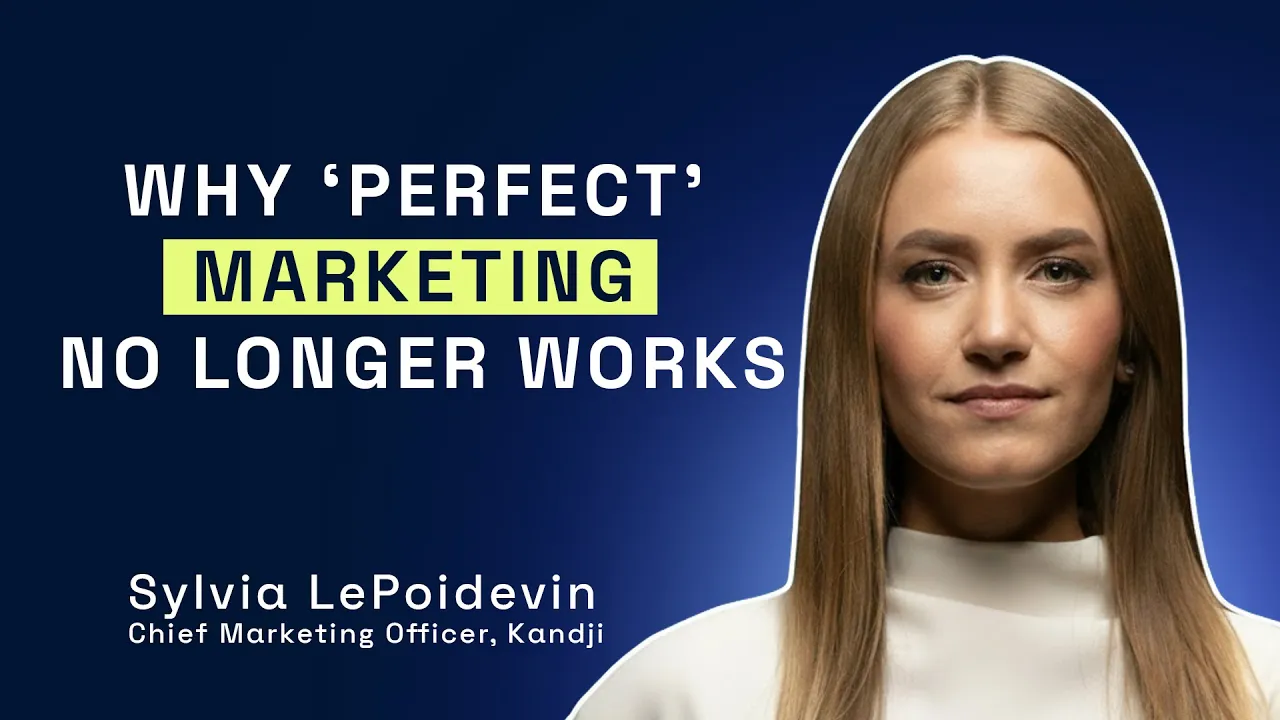
Sylvia LePoidevin was Kandji’s first marketing hire and grew into CMO over six years, helping scale Apple device management to just shy of a billion-dollar valuation.
In our conversation, she unpacked how to keep a soul in your brand, design ideas with buyers (not around them), and measure the things dashboards miss.
If you’re rethinking brand, content, and community for 2025, this one hits.
The gist
Be more human than polished: If AI can create it, it’s table stakes. Personality and point of view cut through.
Design for the 95%: Community, media, and research compound with buyers who aren’t in-market yet.
Know your buyer well enough to laugh with them: Humor is a stress test for true understanding.
Measure what matters, not just what’s logged: Add simple, honest reads to see the invisible brand work.
How Sylvia builds a brand you can’t copy-paste
Give the brand a soul, not a sheen
Polish is everywhere. Sylvia’s bar is different: “It's more important than ever for brands to be human, have a spark, to have a soul.”
Kandji’s bee predates her, but she helped make it iconic. “The bee is one of the most memorable parts of the brand and it does have a story behind it,” a memorable anchor for a product that governs fleets of Apple devices. The shift she’s driving now trades helpful-but-glossy for helpful-with-a-spark, because “anything that can be replicated by AI is not going to be valuable in the future.”
Engineer proximity, not playbooks
Sylvia sat in the early sales trenches and still forces closeness today. She’s spinning up a “digital twin” of buyer personas that anyone on the team can question, runs film-room sessions that pause real calls to dissect language, and ships monthly surveys that double as research content and buyer intel.
Her rule of thumb: “proximity is more important than playbooks.” If you are not close to the buyer, the clever tactic will land flat.
Pitch ideas with the buyer in the room
To push for bolder work, she staged an internal Shark Tank. Judges were stand-ins for Kandji’s personas. The winning pitch: video skits built as inside jokes only IT and security admins would get.
It won because it traveled on its own and because it required real understanding. “Understanding their humor is like one of the deepest forms of knowing your buyer.” Comedy is hard. That is the point.
Design for the 95% who are not in market
Looking back, Sylvia’s biggest miss was waiting. “I waited too long to really build brand community.” The fix is to build earlier for the vast majority who are not buying today: a media site, original research with open-text gold, and community moments that start small and compound.
Don’t wait for 10,000 customers to host your first gathering. Start with 10.
Measure the unlogged touch
Brand lives where tracking breaks. Podcasts, peer referrals, hallway chats. Sylvia layered a simple, optional open-text field on high-intent forms: how did you hear about us. Not as a replacement for attribution, but as a curiosity check that captures reality you will never see in a UTM. It is a small step that keeps investment in creative and community defensible.
What Sylvia said
“It's more important than ever for brands to be human, have a spark, to have a soul.”
“Understanding their humor is like one of the deepest forms of knowing your buyer.”
“Anything that can be replicated by AI is not going to be valuable in the future.”
“I waited too long to really build brand community.”
Why this matters
The internet is about to be flooded with competent, same-sounding content. The moat shifts to buyer closeness, compoundable assets, and work that feels unmistakably yours. If you try to grade that with last-click alone, you’ll underfund the very things that keep your pipeline healthy next quarter.
Build a proximity stack, design a few artifacts your buyer shares without being asked, and capture the unlogged signals so you can keep resourcing the work that actually moves people.
Practical next steps
Name your icon: Pick one visual or ritual that carries your story. Use it everywhere until customers ask for it on swag.
Stand up a proximity cadence: One film session per sprint, a monthly survey with one open-text prompt, and a standing buyer panel.
Ship one “inside joke” asset: A 30–60 second skit only your admins will get. Measure shares, replies, and inbound mentions.
Log the invisible: Add an optional open-text “how did you hear about us?” to high-intent forms and tag themes weekly.
Start the community small: Host a micro-roundtable or user huddle this quarter. Treat it like a seed, not a show.
Audit for AI sameness: Flag assets an LLM could write tomorrow. Keep what’s necessary, reinvest in what’s unmistakable.
Episode Highlights
Transcript
Behind the expert
Sylvia LePoidevin was Kandji’s first marketing hire and grew into CMO over six years, helping scale Apple device management to just shy of a billion-dollar valuation.
In our conversation, she unpacked how to keep a soul in your brand, design ideas with buyers (not around them), and measure the things dashboards miss.
If you’re rethinking brand, content, and community for 2025, this one hits.
The gist
Be more human than polished: If AI can create it, it’s table stakes. Personality and point of view cut through.
Design for the 95%: Community, media, and research compound with buyers who aren’t in-market yet.
Know your buyer well enough to laugh with them: Humor is a stress test for true understanding.
Measure what matters, not just what’s logged: Add simple, honest reads to see the invisible brand work.
How Sylvia builds a brand you can’t copy-paste
Give the brand a soul, not a sheen
Polish is everywhere. Sylvia’s bar is different: “It's more important than ever for brands to be human, have a spark, to have a soul.”
Kandji’s bee predates her, but she helped make it iconic. “The bee is one of the most memorable parts of the brand and it does have a story behind it,” a memorable anchor for a product that governs fleets of Apple devices. The shift she’s driving now trades helpful-but-glossy for helpful-with-a-spark, because “anything that can be replicated by AI is not going to be valuable in the future.”
Engineer proximity, not playbooks
Sylvia sat in the early sales trenches and still forces closeness today. She’s spinning up a “digital twin” of buyer personas that anyone on the team can question, runs film-room sessions that pause real calls to dissect language, and ships monthly surveys that double as research content and buyer intel.
Her rule of thumb: “proximity is more important than playbooks.” If you are not close to the buyer, the clever tactic will land flat.
Pitch ideas with the buyer in the room
To push for bolder work, she staged an internal Shark Tank. Judges were stand-ins for Kandji’s personas. The winning pitch: video skits built as inside jokes only IT and security admins would get.
It won because it traveled on its own and because it required real understanding. “Understanding their humor is like one of the deepest forms of knowing your buyer.” Comedy is hard. That is the point.
Design for the 95% who are not in market
Looking back, Sylvia’s biggest miss was waiting. “I waited too long to really build brand community.” The fix is to build earlier for the vast majority who are not buying today: a media site, original research with open-text gold, and community moments that start small and compound.
Don’t wait for 10,000 customers to host your first gathering. Start with 10.
Measure the unlogged touch
Brand lives where tracking breaks. Podcasts, peer referrals, hallway chats. Sylvia layered a simple, optional open-text field on high-intent forms: how did you hear about us. Not as a replacement for attribution, but as a curiosity check that captures reality you will never see in a UTM. It is a small step that keeps investment in creative and community defensible.
What Sylvia said
“It's more important than ever for brands to be human, have a spark, to have a soul.”
“Understanding their humor is like one of the deepest forms of knowing your buyer.”
“Anything that can be replicated by AI is not going to be valuable in the future.”
“I waited too long to really build brand community.”
Why this matters
The internet is about to be flooded with competent, same-sounding content. The moat shifts to buyer closeness, compoundable assets, and work that feels unmistakably yours. If you try to grade that with last-click alone, you’ll underfund the very things that keep your pipeline healthy next quarter.
Build a proximity stack, design a few artifacts your buyer shares without being asked, and capture the unlogged signals so you can keep resourcing the work that actually moves people.
Practical next steps
Name your icon: Pick one visual or ritual that carries your story. Use it everywhere until customers ask for it on swag.
Stand up a proximity cadence: One film session per sprint, a monthly survey with one open-text prompt, and a standing buyer panel.
Ship one “inside joke” asset: A 30–60 second skit only your admins will get. Measure shares, replies, and inbound mentions.
Log the invisible: Add an optional open-text “how did you hear about us?” to high-intent forms and tag themes weekly.
Start the community small: Host a micro-roundtable or user huddle this quarter. Treat it like a seed, not a show.
Audit for AI sameness: Flag assets an LLM could write tomorrow. Keep what’s necessary, reinvest in what’s unmistakable.
Episode Highlights
Transcript
Behind the expert
Sylvia LePoidevin was Kandji’s first marketing hire and grew into CMO over six years, helping scale Apple device management to just shy of a billion-dollar valuation.
In our conversation, she unpacked how to keep a soul in your brand, design ideas with buyers (not around them), and measure the things dashboards miss.
If you’re rethinking brand, content, and community for 2025, this one hits.
The gist
Be more human than polished: If AI can create it, it’s table stakes. Personality and point of view cut through.
Design for the 95%: Community, media, and research compound with buyers who aren’t in-market yet.
Know your buyer well enough to laugh with them: Humor is a stress test for true understanding.
Measure what matters, not just what’s logged: Add simple, honest reads to see the invisible brand work.
How Sylvia builds a brand you can’t copy-paste
Give the brand a soul, not a sheen
Polish is everywhere. Sylvia’s bar is different: “It's more important than ever for brands to be human, have a spark, to have a soul.”
Kandji’s bee predates her, but she helped make it iconic. “The bee is one of the most memorable parts of the brand and it does have a story behind it,” a memorable anchor for a product that governs fleets of Apple devices. The shift she’s driving now trades helpful-but-glossy for helpful-with-a-spark, because “anything that can be replicated by AI is not going to be valuable in the future.”
Engineer proximity, not playbooks
Sylvia sat in the early sales trenches and still forces closeness today. She’s spinning up a “digital twin” of buyer personas that anyone on the team can question, runs film-room sessions that pause real calls to dissect language, and ships monthly surveys that double as research content and buyer intel.
Her rule of thumb: “proximity is more important than playbooks.” If you are not close to the buyer, the clever tactic will land flat.
Pitch ideas with the buyer in the room
To push for bolder work, she staged an internal Shark Tank. Judges were stand-ins for Kandji’s personas. The winning pitch: video skits built as inside jokes only IT and security admins would get.
It won because it traveled on its own and because it required real understanding. “Understanding their humor is like one of the deepest forms of knowing your buyer.” Comedy is hard. That is the point.
Design for the 95% who are not in market
Looking back, Sylvia’s biggest miss was waiting. “I waited too long to really build brand community.” The fix is to build earlier for the vast majority who are not buying today: a media site, original research with open-text gold, and community moments that start small and compound.
Don’t wait for 10,000 customers to host your first gathering. Start with 10.
Measure the unlogged touch
Brand lives where tracking breaks. Podcasts, peer referrals, hallway chats. Sylvia layered a simple, optional open-text field on high-intent forms: how did you hear about us. Not as a replacement for attribution, but as a curiosity check that captures reality you will never see in a UTM. It is a small step that keeps investment in creative and community defensible.
What Sylvia said
“It's more important than ever for brands to be human, have a spark, to have a soul.”
“Understanding their humor is like one of the deepest forms of knowing your buyer.”
“Anything that can be replicated by AI is not going to be valuable in the future.”
“I waited too long to really build brand community.”
Why this matters
The internet is about to be flooded with competent, same-sounding content. The moat shifts to buyer closeness, compoundable assets, and work that feels unmistakably yours. If you try to grade that with last-click alone, you’ll underfund the very things that keep your pipeline healthy next quarter.
Build a proximity stack, design a few artifacts your buyer shares without being asked, and capture the unlogged signals so you can keep resourcing the work that actually moves people.
Practical next steps
Name your icon: Pick one visual or ritual that carries your story. Use it everywhere until customers ask for it on swag.
Stand up a proximity cadence: One film session per sprint, a monthly survey with one open-text prompt, and a standing buyer panel.
Ship one “inside joke” asset: A 30–60 second skit only your admins will get. Measure shares, replies, and inbound mentions.
Log the invisible: Add an optional open-text “how did you hear about us?” to high-intent forms and tag themes weekly.
Start the community small: Host a micro-roundtable or user huddle this quarter. Treat it like a seed, not a show.
Audit for AI sameness: Flag assets an LLM could write tomorrow. Keep what’s necessary, reinvest in what’s unmistakable.
Our Guest
Sylvia LePoidevin
Sign-up. Stay Sharp
Get the latest podcasts, new content drops, and fresh insights.