
The Brandformance Podcast

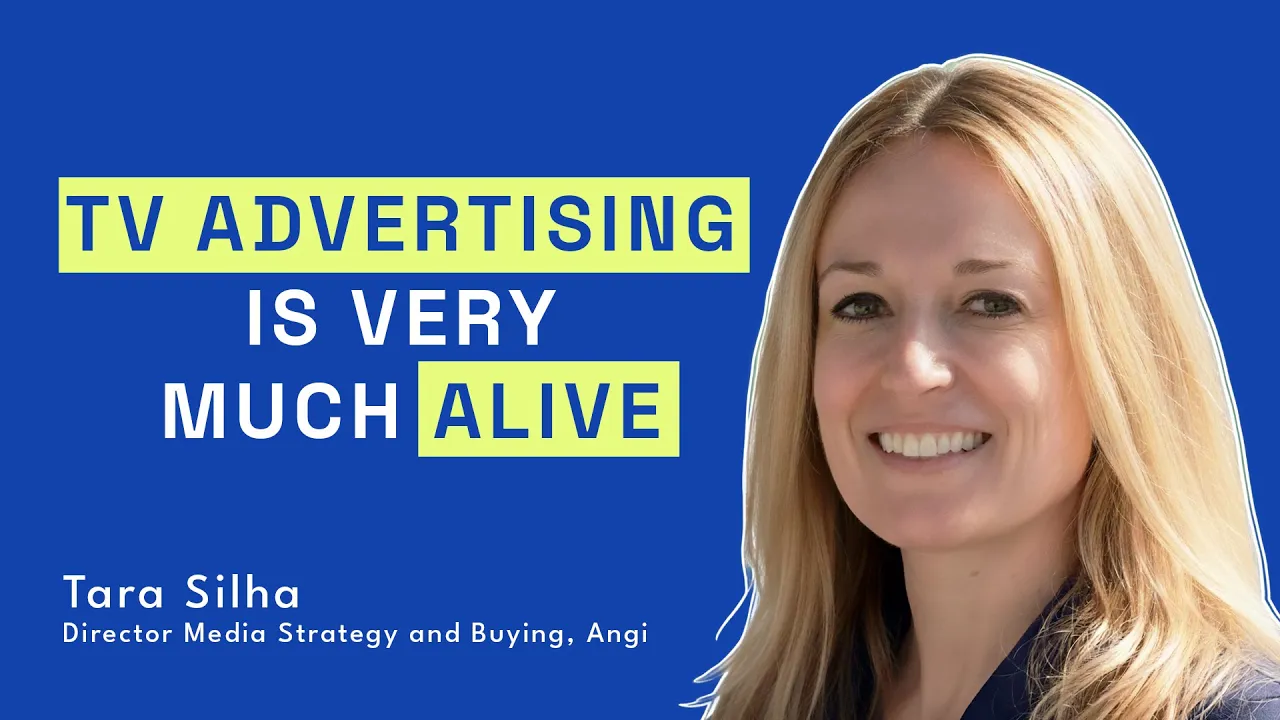
How next-gen TV advertising can expand your audience ft. Tara Silha

Or listen where you get your podcasts

Or listen where you get your podcasts

Episode Highlights

Transcript

Behind the expert

Tara Silha leads media buying and strategy at Angi, where she’s spent years turning television and CTV into accountable growth channels. She’s worked across the spectrum on the agency, sales, and brand side at places like Quince, Carewell, and The RealReal, so she knows how the pieces fit and where the waste hides.

In our recent conversation with Tara, she covered how TV and CTV actually work together, what modern buying looks like (from dayparts to scatter to programmatic), and how to measure real lift beyond last-click, which we thought was perfect for anyone planning a 2026 media mix.

The gist

  • Plan TV and CTV as one: Viewers don’t silo; your plan shouldn’t either.

  • Create, then capture: TV sparks demand; search and social close it.

  • Modern mix wins: Blend publisher-direct, programmatic CTV, and smart scatter.

  • Prove lift, not clicks: Use incrementality and MMM, not seven-day last-click.

How to plan TV and CTV in 2025

TV is still TV, even without the cable box
Your audience doesn’t care whether the feed comes via cable, Roku, or an app on a laptop. It’s still the big-screen experience. Live categories like sports and news command premiums, and many on-demand placements price more efficiently. 

Treat CTV as television inventory you pace and optimize, not as a clickable web channel.

Demand gen vs demand capture
TV’s job is to start the story and spike branded search. Digital’s job is to close. If you judge TV on same-day orders, you’ll underfund it and watch your “efficient” search and social fade a few weeks later. 

Track lagged brand search, site visits, and assisted conversions, so the funnel reads as a system.

Creative and cuts: 30s to learn, 15s to scale
Launching a new message? Lead with a 30-second ad. Once familiarity lands, rotate 15-second ones to stretch reach and frequency. If the product is complex or skews older, a 60-second can pay off. 

Keep the call to action explicit. Even if it looks good, beautiful without a point rarely performs.

Dayparts and deals: Where the value hides
Primetime is crowded. Daytime and early fringe can be quiet outperformers with lower CPMs and higher attention. Don’t fear scatter or so-called “remnant," you’re trading guarantees for price, not quality. 

Go publisher-direct where you can, then use programmatic CTV to fill targeted gaps and segments.

Tests that actually answer, “Did this work?”
For CTV, run geo or platform lift tests. For linear, use pulse designs: heavy on-air for a few weeks, then off, and read the deltas. Set windows longer than seven days because TV response drags. 

Pair experiments with MMM to quantify long-run contribution and plan spend beyond individual flights.

What Tara Silha said (and why it sticks)

  • “For me, a GRP doesn’t equate to a conversion.”

  • “Testing your creative in a panel environment is very skewed to when you actually see them in market.”

  • “You’re not going to get your first TV spot and then just nail it.”

  • “Daytime or early fringe are actually gold mines.”

Why this matters

If you grade TV on last-click, you’ll miss how it feeds the channels you love to credit. Design a lift test you can actually run, read beyond a week, then roll results into your MMM, so you can forecast, not guess. That’s how you defend budget and decide where the next dollar goes.

Practical next steps:

  1. Launch with a 30-second ad, scale with 15-second, and make the CTA direct.

  2. Blend publisher-direct CTV with programmatic and selective scatter, and avoid reflexive prime-time sprees.

  3. Stand up a geographic or pulse test now, and define success past day-zero sales.

  4. Feed the findings into your MMM to set quarterly allocation.

Remember, if TV looks “brand-only” in your dashboard, fix the measurement and the performance shows up.

Check out this deck we presented during our Office Hours with Tara, which you can use as a reference any time you need some inspiration for media buy.

Episode Highlights

Transcript

Behind the expert

Tara Silha leads media buying and strategy at Angi, where she’s spent years turning television and CTV into accountable growth channels. She’s worked across the spectrum on the agency, sales, and brand side at places like Quince, Carewell, and The RealReal, so she knows how the pieces fit and where the waste hides.

In our recent conversation with Tara, she covered how TV and CTV actually work together, what modern buying looks like (from dayparts to scatter to programmatic), and how to measure real lift beyond last-click, which we thought was perfect for anyone planning a 2026 media mix.

The gist

  • Plan TV and CTV as one: Viewers don’t silo; your plan shouldn’t either.

  • Create, then capture: TV sparks demand; search and social close it.

  • Modern mix wins: Blend publisher-direct, programmatic CTV, and smart scatter.

  • Prove lift, not clicks: Use incrementality and MMM, not seven-day last-click.

How to plan TV and CTV in 2025

TV is still TV, even without the cable box
Your audience doesn’t care whether the feed comes via cable, Roku, or an app on a laptop. It’s still the big-screen experience. Live categories like sports and news command premiums, and many on-demand placements price more efficiently. 

Treat CTV as television inventory you pace and optimize, not as a clickable web channel.

Demand gen vs demand capture
TV’s job is to start the story and spike branded search. Digital’s job is to close. If you judge TV on same-day orders, you’ll underfund it and watch your “efficient” search and social fade a few weeks later. 

Track lagged brand search, site visits, and assisted conversions, so the funnel reads as a system.

Creative and cuts: 30s to learn, 15s to scale
Launching a new message? Lead with a 30-second ad. Once familiarity lands, rotate 15-second ones to stretch reach and frequency. If the product is complex or skews older, a 60-second can pay off. 

Keep the call to action explicit. Even if it looks good, beautiful without a point rarely performs.

Dayparts and deals: Where the value hides
Primetime is crowded. Daytime and early fringe can be quiet outperformers with lower CPMs and higher attention. Don’t fear scatter or so-called “remnant," you’re trading guarantees for price, not quality. 

Go publisher-direct where you can, then use programmatic CTV to fill targeted gaps and segments.

Tests that actually answer, “Did this work?”
For CTV, run geo or platform lift tests. For linear, use pulse designs: heavy on-air for a few weeks, then off, and read the deltas. Set windows longer than seven days because TV response drags. 

Pair experiments with MMM to quantify long-run contribution and plan spend beyond individual flights.

What Tara Silha said (and why it sticks)

  • “For me, a GRP doesn’t equate to a conversion.”

  • “Testing your creative in a panel environment is very skewed to when you actually see them in market.”

  • “You’re not going to get your first TV spot and then just nail it.”

  • “Daytime or early fringe are actually gold mines.”

Why this matters

If you grade TV on last-click, you’ll miss how it feeds the channels you love to credit. Design a lift test you can actually run, read beyond a week, then roll results into your MMM, so you can forecast, not guess. That’s how you defend budget and decide where the next dollar goes.

Practical next steps:

  1. Launch with a 30-second ad, scale with 15-second, and make the CTA direct.

  2. Blend publisher-direct CTV with programmatic and selective scatter, and avoid reflexive prime-time sprees.

  3. Stand up a geographic or pulse test now, and define success past day-zero sales.

  4. Feed the findings into your MMM to set quarterly allocation.

Remember, if TV looks “brand-only” in your dashboard, fix the measurement and the performance shows up.

Check out this deck we presented during our Office Hours with Tara, which you can use as a reference any time you need some inspiration for media buy.

Episode Highlights

Transcript

Behind the expert

Tara Silha leads media buying and strategy at Angi, where she’s spent years turning television and CTV into accountable growth channels. She’s worked across the spectrum on the agency, sales, and brand side at places like Quince, Carewell, and The RealReal, so she knows how the pieces fit and where the waste hides.

In our recent conversation with Tara, she covered how TV and CTV actually work together, what modern buying looks like (from dayparts to scatter to programmatic), and how to measure real lift beyond last-click, which we thought was perfect for anyone planning a 2026 media mix.

The gist

  • Plan TV and CTV as one: Viewers don’t silo; your plan shouldn’t either.

  • Create, then capture: TV sparks demand; search and social close it.

  • Modern mix wins: Blend publisher-direct, programmatic CTV, and smart scatter.

  • Prove lift, not clicks: Use incrementality and MMM, not seven-day last-click.

How to plan TV and CTV in 2025

TV is still TV, even without the cable box
Your audience doesn’t care whether the feed comes via cable, Roku, or an app on a laptop. It’s still the big-screen experience. Live categories like sports and news command premiums, and many on-demand placements price more efficiently. 

Treat CTV as television inventory you pace and optimize, not as a clickable web channel.

Demand gen vs demand capture
TV’s job is to start the story and spike branded search. Digital’s job is to close. If you judge TV on same-day orders, you’ll underfund it and watch your “efficient” search and social fade a few weeks later. 

Track lagged brand search, site visits, and assisted conversions, so the funnel reads as a system.

Creative and cuts: 30s to learn, 15s to scale
Launching a new message? Lead with a 30-second ad. Once familiarity lands, rotate 15-second ones to stretch reach and frequency. If the product is complex or skews older, a 60-second can pay off. 

Keep the call to action explicit. Even if it looks good, beautiful without a point rarely performs.

Dayparts and deals: Where the value hides
Primetime is crowded. Daytime and early fringe can be quiet outperformers with lower CPMs and higher attention. Don’t fear scatter or so-called “remnant," you’re trading guarantees for price, not quality. 

Go publisher-direct where you can, then use programmatic CTV to fill targeted gaps and segments.

Tests that actually answer, “Did this work?”
For CTV, run geo or platform lift tests. For linear, use pulse designs: heavy on-air for a few weeks, then off, and read the deltas. Set windows longer than seven days because TV response drags. 

Pair experiments with MMM to quantify long-run contribution and plan spend beyond individual flights.

What Tara Silha said (and why it sticks)

  • “For me, a GRP doesn’t equate to a conversion.”

  • “Testing your creative in a panel environment is very skewed to when you actually see them in market.”

  • “You’re not going to get your first TV spot and then just nail it.”

  • “Daytime or early fringe are actually gold mines.”

Why this matters

If you grade TV on last-click, you’ll miss how it feeds the channels you love to credit. Design a lift test you can actually run, read beyond a week, then roll results into your MMM, so you can forecast, not guess. That’s how you defend budget and decide where the next dollar goes.

Practical next steps:

  1. Launch with a 30-second ad, scale with 15-second, and make the CTA direct.

  2. Blend publisher-direct CTV with programmatic and selective scatter, and avoid reflexive prime-time sprees.

  3. Stand up a geographic or pulse test now, and define success past day-zero sales.

  4. Feed the findings into your MMM to set quarterly allocation.

Remember, if TV looks “brand-only” in your dashboard, fix the measurement and the performance shows up.

Check out this deck we presented during our Office Hours with Tara, which you can use as a reference any time you need some inspiration for media buy.

Sign-up. Stay Sharp

Get the latest podcasts, new content drops, and fresh insights.

By submitting this form you agree to our privacy policy.

Discover how Paramark analyzed $2.2B+ in marketing spend

By providing your contact info, you agree to receive communications from Paramark. You can opt-out at any time. For details, refer to our Privacy Policy.

See Paramark in action

See Paramark in action

See Paramark in action

Demystify marketing measurement & growth

Marketing trends and tactics, plus the latest insights, experiments, and content drops from Paramark. Written by our CEO, delivered straight to your inbox. Sign up. Stay sharp.

By providing your contact info, you agree to receive communications from Paramark. You can opt-out at any time. For details, refer to our Privacy Policy

© 2025 Paramark, Inc.

Demystify marketing measurement & growth

Marketing trends and tactics, plus the latest insights, experiments, and content drops from Paramark. Written by our CEO, delivered straight to your inbox. Sign up. Stay sharp.

By providing your contact info, you agree to receive communications from Paramark. You can opt-out at any time. For details, refer to our Privacy Policy

© 2025 Paramark, Inc.

Demystify marketing measurement & growth

Marketing trends and tactics, plus the latest insights, experiments, and content drops from Paramark. Written by our CEO, delivered straight to your inbox. Sign up. Stay sharp.

By providing your contact info, you agree to receive communications from Paramark. You can opt-out at any time. For details, refer to our Privacy Policy

© 2025 Paramark, Inc.