

The Brandformance Podcast

How Homebase rebuilt a legacy brand without losing the plot

Or listen where you get your podcasts

Or listen where you get your podcasts

Episode Highlights

Transcript

Behind the expert

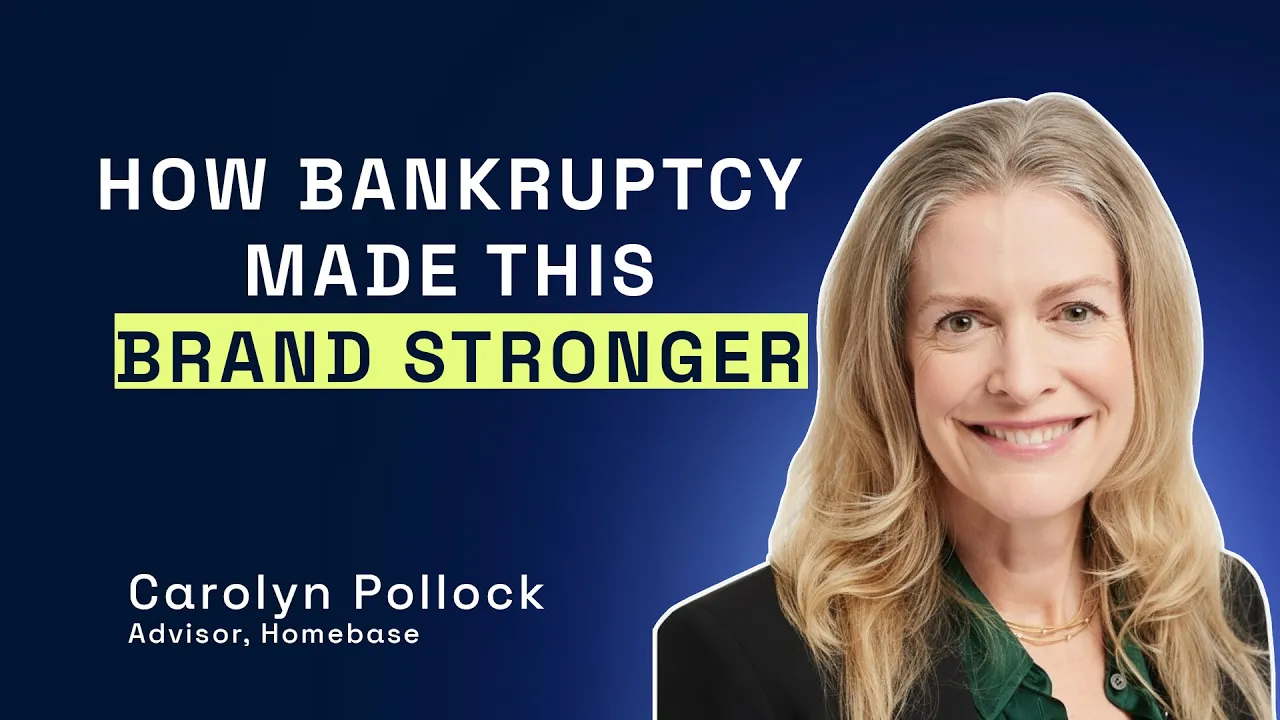
Carolyn Pollock, Advisor at Homebase, helped lead Tailored Brands out of Chapter 11 and into a modern, measured, and memorable marketing machine. 

In this conversation, she walks through turning discount-first habits into customer-first storytelling, proving impact with real experiments, and building data foundations sturdy enough to handle the next wave of AI and channels. If you are sitting on an established name that needs a hard refresh and a tighter read on ROI, read on.

The gist

  • Stop leading with price: Reclaim a story customers care about, then use price as a nudge, not the headline.

  • Test like you mean it: Match-market designs, longer windows, weekly brand tracking, and retail-native MMM beat weekend readouts.

  • Make people feel something: Humor and emotion moved consideration where awareness was already high.

  • Build trust with finance: Co-own the model with your CFO so the wins and limits are shared, not debated.

How Carolyn drives a turnaround that sticks

Reset the story before you reset the spend
When Pollock arrived, the playbook was heavy on offline and heavier on discounts. She flipped the order. First, retune the narrative to where customers actually were: returning to weddings, backyards, and offices after closures. 

Then let price show up as urgency, not identity. 

The shift invited humor into a brand long known for one line, which helped jostle old perceptions and lift consideration among the exact cohorts that dress up for life’s big moments.

Trade weekend snapshots for durable reads
The old read was simple and misleading: run TV on a weekend and watch sales. Pollock’s team layered rigor. They ran match-market tests that changed media weight and mix by city, extended test windows so results stabilized, and stood up weekly brand tracking using fast polling instead of quarterly marathons. 

They paired it with a retail-focused media mix model that blended MMM with practical multi-touch views, so the team could see contribution weekly and over time.

Modernize channels and measurement together
Moving money to social or new video alone would not have landed without better reads and cleaner data. Pollock’s crew harmonized data into a customer 360 with identity resolution, so audience actions connected to outcomes. That made creative and channel choices actionable, and it made the MMM outputs credible enough to guide pacing, flighting, and mix by customer type.

Make finance a co-pilot, not a gate
Turnarounds die when models live only in marketing. Pollock brought the CFO and FP&A into the RFP and model design, and kept them in the interpretation loop. 

That equity let the team defend long-cycle investments like brand consideration once near-term ROI improved. It also meant everyone could say yes or no using the same math.

Keep the relationship two-way
Quant alone was never the point. Pollock pushes teams to build real dialogue, not just CRM blasts. 

That means human conversations, social comment loops, and qualitative reads that sit next to dashboards. It is also why she is skeptical of over-personalization for its own sake; not every one of 10,000 variants earns its keep, especially if it dilutes a core story people remember.

What Carolyn said

  • “The introduction of humor was a way for us to break through and change, shake up people's perceptions.”

  • “You can't involve your finance partners enough.”

  • “Most CRM is like you spamming the customer with a ton of things that you want to talk about through email and text… It's not actually a relationship.”

Why this matters

If your brand is famous but not chosen, price cuts won’t save you. You need a story that matches the moment, creative that earns attention, and measurement that shows contribution beyond the week you aired. Data foundations and finance partnership are not back-office chores; they are what let you take smarter swings, prove them, and keep going when the payback is longer than seven days.

Practical next steps

  • Rewrite the brief: Lead with the customer’s moment and outcome. Treat price as the CTA, not the plot.

  • Design one clean match-market test: Pick comparable cities, vary TV and social weight, and run it long enough to read.

  • Stand up weekly brand tracking: Replace quarterly 30-minute surveys with fast polls on awareness and consideration.

  • Adopt a retail-native MMM: Use a model that reads weekly contribution and separates new vs existing customers.

  • Co-own the model with finance: Bring the CFO into vendor selection and success criteria now, not after the readout.

  • Audit personalization: Keep the variants that lift and kill the rest. Protect a core message people can recall months later.

Episode Highlights

Transcript

Behind the expert

Carolyn Pollock, Advisor at Homebase, helped lead Tailored Brands out of Chapter 11 and into a modern, measured, and memorable marketing machine. 

In this conversation, she walks through turning discount-first habits into customer-first storytelling, proving impact with real experiments, and building data foundations sturdy enough to handle the next wave of AI and channels. If you are sitting on an established name that needs a hard refresh and a tighter read on ROI, read on.

The gist

  • Stop leading with price: Reclaim a story customers care about, then use price as a nudge, not the headline.

  • Test like you mean it: Match-market designs, longer windows, weekly brand tracking, and retail-native MMM beat weekend readouts.

  • Make people feel something: Humor and emotion moved consideration where awareness was already high.

  • Build trust with finance: Co-own the model with your CFO so the wins and limits are shared, not debated.

How Carolyn drives a turnaround that sticks

Reset the story before you reset the spend
When Pollock arrived, the playbook was heavy on offline and heavier on discounts. She flipped the order. First, retune the narrative to where customers actually were: returning to weddings, backyards, and offices after closures. 

Then let price show up as urgency, not identity. 

The shift invited humor into a brand long known for one line, which helped jostle old perceptions and lift consideration among the exact cohorts that dress up for life’s big moments.

Trade weekend snapshots for durable reads
The old read was simple and misleading: run TV on a weekend and watch sales. Pollock’s team layered rigor. They ran match-market tests that changed media weight and mix by city, extended test windows so results stabilized, and stood up weekly brand tracking using fast polling instead of quarterly marathons. 

They paired it with a retail-focused media mix model that blended MMM with practical multi-touch views, so the team could see contribution weekly and over time.

Modernize channels and measurement together
Moving money to social or new video alone would not have landed without better reads and cleaner data. Pollock’s crew harmonized data into a customer 360 with identity resolution, so audience actions connected to outcomes. That made creative and channel choices actionable, and it made the MMM outputs credible enough to guide pacing, flighting, and mix by customer type.

Make finance a co-pilot, not a gate
Turnarounds die when models live only in marketing. Pollock brought the CFO and FP&A into the RFP and model design, and kept them in the interpretation loop. 

That equity let the team defend long-cycle investments like brand consideration once near-term ROI improved. It also meant everyone could say yes or no using the same math.

Keep the relationship two-way
Quant alone was never the point. Pollock pushes teams to build real dialogue, not just CRM blasts. 

That means human conversations, social comment loops, and qualitative reads that sit next to dashboards. It is also why she is skeptical of over-personalization for its own sake; not every one of 10,000 variants earns its keep, especially if it dilutes a core story people remember.

What Carolyn said

  • “The introduction of humor was a way for us to break through and change, shake up people's perceptions.”

  • “You can't involve your finance partners enough.”

  • “Most CRM is like you spamming the customer with a ton of things that you want to talk about through email and text… It's not actually a relationship.”

Why this matters

If your brand is famous but not chosen, price cuts won’t save you. You need a story that matches the moment, creative that earns attention, and measurement that shows contribution beyond the week you aired. Data foundations and finance partnership are not back-office chores; they are what let you take smarter swings, prove them, and keep going when the payback is longer than seven days.

Practical next steps

  • Rewrite the brief: Lead with the customer’s moment and outcome. Treat price as the CTA, not the plot.

  • Design one clean match-market test: Pick comparable cities, vary TV and social weight, and run it long enough to read.

  • Stand up weekly brand tracking: Replace quarterly 30-minute surveys with fast polls on awareness and consideration.

  • Adopt a retail-native MMM: Use a model that reads weekly contribution and separates new vs existing customers.

  • Co-own the model with finance: Bring the CFO into vendor selection and success criteria now, not after the readout.

  • Audit personalization: Keep the variants that lift and kill the rest. Protect a core message people can recall months later.

Episode Highlights

Transcript

Behind the expert

Carolyn Pollock, Advisor at Homebase, helped lead Tailored Brands out of Chapter 11 and into a modern, measured, and memorable marketing machine. 

In this conversation, she walks through turning discount-first habits into customer-first storytelling, proving impact with real experiments, and building data foundations sturdy enough to handle the next wave of AI and channels. If you are sitting on an established name that needs a hard refresh and a tighter read on ROI, read on.

The gist

  • Stop leading with price: Reclaim a story customers care about, then use price as a nudge, not the headline.

  • Test like you mean it: Match-market designs, longer windows, weekly brand tracking, and retail-native MMM beat weekend readouts.

  • Make people feel something: Humor and emotion moved consideration where awareness was already high.

  • Build trust with finance: Co-own the model with your CFO so the wins and limits are shared, not debated.

How Carolyn drives a turnaround that sticks

Reset the story before you reset the spend
When Pollock arrived, the playbook was heavy on offline and heavier on discounts. She flipped the order. First, retune the narrative to where customers actually were: returning to weddings, backyards, and offices after closures. 

Then let price show up as urgency, not identity. 

The shift invited humor into a brand long known for one line, which helped jostle old perceptions and lift consideration among the exact cohorts that dress up for life’s big moments.

Trade weekend snapshots for durable reads
The old read was simple and misleading: run TV on a weekend and watch sales. Pollock’s team layered rigor. They ran match-market tests that changed media weight and mix by city, extended test windows so results stabilized, and stood up weekly brand tracking using fast polling instead of quarterly marathons. 

They paired it with a retail-focused media mix model that blended MMM with practical multi-touch views, so the team could see contribution weekly and over time.

Modernize channels and measurement together
Moving money to social or new video alone would not have landed without better reads and cleaner data. Pollock’s crew harmonized data into a customer 360 with identity resolution, so audience actions connected to outcomes. That made creative and channel choices actionable, and it made the MMM outputs credible enough to guide pacing, flighting, and mix by customer type.

Make finance a co-pilot, not a gate
Turnarounds die when models live only in marketing. Pollock brought the CFO and FP&A into the RFP and model design, and kept them in the interpretation loop. 

That equity let the team defend long-cycle investments like brand consideration once near-term ROI improved. It also meant everyone could say yes or no using the same math.

Keep the relationship two-way
Quant alone was never the point. Pollock pushes teams to build real dialogue, not just CRM blasts. 

That means human conversations, social comment loops, and qualitative reads that sit next to dashboards. It is also why she is skeptical of over-personalization for its own sake; not every one of 10,000 variants earns its keep, especially if it dilutes a core story people remember.

What Carolyn said

  • “The introduction of humor was a way for us to break through and change, shake up people's perceptions.”

  • “You can't involve your finance partners enough.”

  • “Most CRM is like you spamming the customer with a ton of things that you want to talk about through email and text… It's not actually a relationship.”

Why this matters

If your brand is famous but not chosen, price cuts won’t save you. You need a story that matches the moment, creative that earns attention, and measurement that shows contribution beyond the week you aired. Data foundations and finance partnership are not back-office chores; they are what let you take smarter swings, prove them, and keep going when the payback is longer than seven days.

Practical next steps

  • Rewrite the brief: Lead with the customer’s moment and outcome. Treat price as the CTA, not the plot.

  • Design one clean match-market test: Pick comparable cities, vary TV and social weight, and run it long enough to read.

  • Stand up weekly brand tracking: Replace quarterly 30-minute surveys with fast polls on awareness and consideration.

  • Adopt a retail-native MMM: Use a model that reads weekly contribution and separates new vs existing customers.

  • Co-own the model with finance: Bring the CFO into vendor selection and success criteria now, not after the readout.

  • Audit personalization: Keep the variants that lift and kill the rest. Protect a core message people can recall months later.

Sign-up. Stay Sharp

Get the latest podcasts, new content drops, and fresh insights.

By submitting this form you agree to our privacy policy.

Discover how Paramark analyzed $2.2B+ in marketing spend

By providing your contact info, you agree to receive communications from Paramark. You can opt-out at any time. For details, refer to our Privacy Policy.

See Paramark in action

See Paramark in action

See Paramark in action

Demystify marketing measurement & growth

Marketing trends and tactics, plus the latest insights, experiments, and content drops from Paramark. Written by our CEO, delivered straight to your inbox. Sign up. Stay sharp.

By providing your contact info, you agree to receive communications from Paramark. You can opt-out at any time. For details, refer to our Privacy Policy

© 2026 Paramark, Inc.

Demystify marketing measurement & growth

Marketing trends and tactics, plus the latest insights, experiments, and content drops from Paramark. Written by our CEO, delivered straight to your inbox. Sign up. Stay sharp.

By providing your contact info, you agree to receive communications from Paramark. You can opt-out at any time. For details, refer to our Privacy Policy

© 2026 Paramark, Inc.

Demystify marketing measurement & growth

Marketing trends and tactics, plus the latest insights, experiments, and content drops from Paramark. Written by our CEO, delivered straight to your inbox. Sign up. Stay sharp.

By providing your contact info, you agree to receive communications from Paramark. You can opt-out at any time. For details, refer to our Privacy Policy

© 2026 Paramark, Inc.