
Episode Highlights
Transcript
Behind the expert
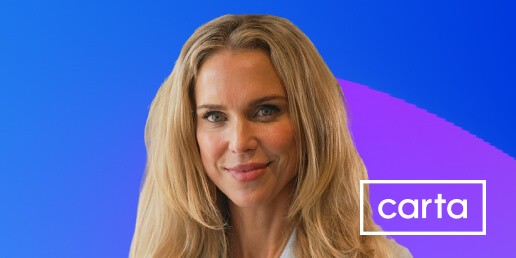
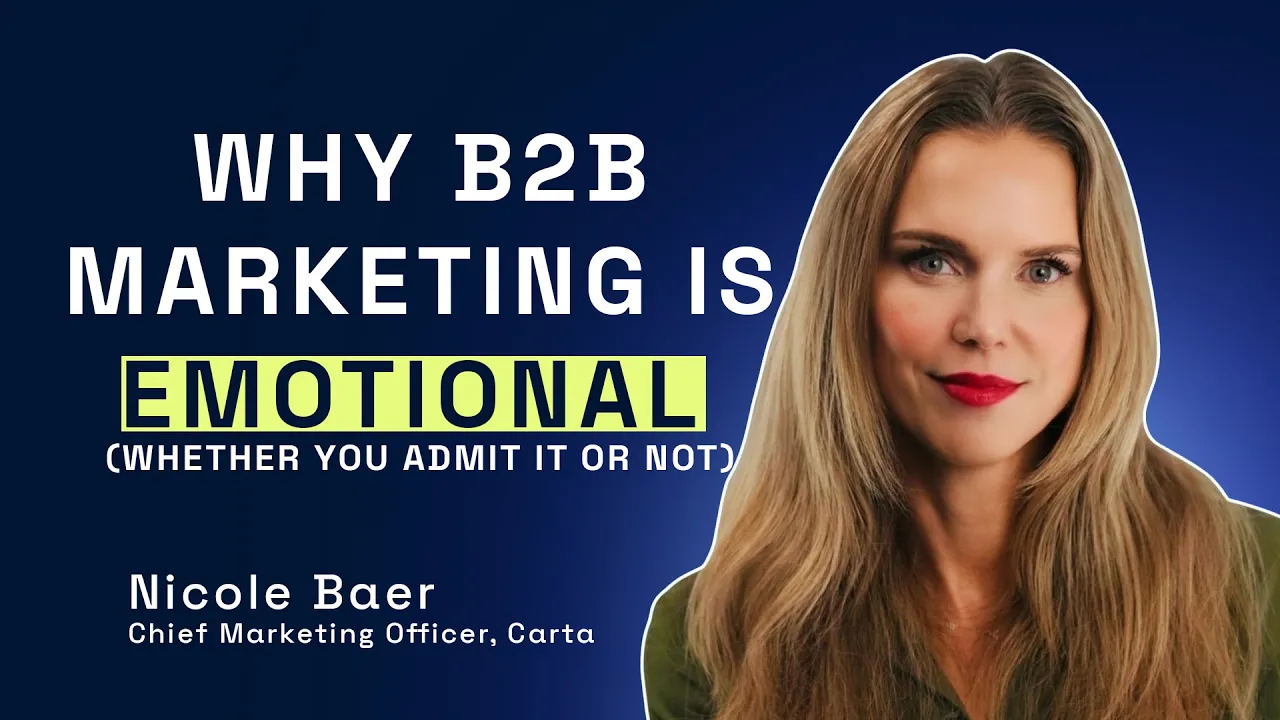
Nicole Baer runs all of marketing at Carta. Before that, she led marketing at Logitech, Zendesk, and Aon Hewitt, plus spent time consulting.
In this episode of Brandformance, Nicole breaks down how Carta tells a bigger story now that it’s more than cap tables, why customer love beat a quick rebrand, and how she thinks about brand when performance marketing feels like the safer button to keep pushing.
Key takeaway
Brand is a long-term advantage, but only if it’s tied to a clear strategic decision (reputation, expansion, pricing), not just creative expression.
The gist
“B2B isn’t emotional” is wrong. Big work decisions feel personal because careers are on the line.
Carta shifted from “startup cap tables” to “ERP for private capital,” and the story had to expand with it.
After a press wobble, Nicole didn’t rush to a rebrand. She put customers in front to reset perception.
Brand is the long-term edge because performance can turn into a race to the bottom.
The story got bigger, but the buyer is still a human
Nicole talked about how Carta started with clear message-market fit: a startup product for startups. That was simpler. Then Carta expanded into something more infrastructural: fund administration, accounting, and what she called “the ERP for private capital.”
That kind of product can make marketers panic because it sounds technical and dry. Nicole pushed back. Her point: these are huge decisions. People are picking tools that affect their credibility, their team, and their day-to-day stress. That’s emotional, even if the product category looks boring.
Her tactical approach starts with knowing the persona in a living, changing way. One of their core personas is fund CFOs. Their world changes when private markets change, and that changes what they care about. She gave AI investing as one example that’s reshaping the environment around them.
She also kept it simple: CFOs are people. Carta has a playful DNA (she mentioned confetti), so they can show up with humor while still taking the product seriously. She called it creating “a smile in the mind.”
Customer love beat a quick rebrand
When Nicole joined Carta, she said the company had “a little bit of a wobble from a press perspective.” The obvious move would’ve been to rush into a rebrand and try to reset the narrative with new words and new visuals.
She didn’t do that.
Instead, she focused on getting customers who love Carta to tell the story. They launched the Carta Love Campaign and let customers talk about their startups, their ambitions, and what they’re building. Carta shows up inside that, but it’s not the main character.
She also shared a marketing rule of thumb she’s seen play out: when something is less self-serving, it often performs better. This campaign started small, then became a bigger idea that shaped other decisions, including events and partnerships.
She gave a concrete example: even their Golden State Warriors partnership tied back to Carta Love through experiences like courtside seats and suites, not just logos and impressions. The idea became a theme that could stretch across channels.
Insight content can be a growth engine when it grows with the business
Carta’s Insights work came up too, especially Peter Walker’s role. Nicole described it as almost a mini business within Carta, with end-to-end ownership.
The important part wasn’t “publish reports.” It was that Insights evolved as Carta evolved. As Carta expanded from cap table to fund admin to private equity, the insights expanded too. Then it fed top-of-funnel: social content, report downloads, events, speaking, and customer conversations.
Nicole also said they don’t monetize that private markets data and they make it free. That helps build real affinity, which makes customer storytelling easier than it is for many B2B companies.
Brand doesn’t have to be for everyone
Nicole had a clear take here: brand is having a renaissance in B2B, and she’s leaning into it.
She still likes performance marketing and Carta runs a lot of it. Her concern is what happens when performance becomes the only play. You keep pushing that button because you can see immediate impact, and then you end up stuck in a race that gets cheaper, noisier, and easier to copy.
Her line was that performance is subject to arbitrage and brand isn’t in the same way. Brand creates more lasting advantage.
She also said something that cuts against a lot of B2B “make it broad” instincts: your brand doesn’t need to appeal to everyone. She and Carta’s CEO talk about specificity. She wants creative that hits their personas precisely, and she doesn’t care if most people don’t get it.
The Segment billboard example was the vibe: a simple inside joke that makes the right people lean in, and makes everyone else ask, “what is going on?” That confusion can even help spread it because people share it.
Quote snacks
“There's a misnomer that B2B marketing is not emotional. I actually very much disagree with that.”
“I focused on how can we have customers who love us tell our story”
“The less self-serving marketing is, the better it generally is going to perform.”
“Brand is actually what is the true differentiator, especially in the world of AI,”
“I don't think that your brand needs to appeal to everyone.”
Why it matters
A lot of B2B marketing gets stuck trying to sound “serious,” then wonders why it blends in.
Nicole’s point is that the buyer already feels the weight of the decision. You don’t need to pretend it’s emotionless. If you understand what the buyer is anxious about, proud of, and responsible for, you can tell a story that lands.
The other lesson is about what you do when perception gets shaky. If you sprint to a rebrand, you might look like you’re trying to paint over something. If you let customers speak first, it’s harder to dismiss.
And if you only play performance, you might grow for a while and still end up replaceable.
Practical next steps
Audit your category language. If your messaging sounds like “infrastructure isn’t emotional,” rewrite it in plain terms that connect to credibility, risk, and day-to-day work.
Build personas as moving targets. Ask what changed in their world this year (AI investing, market swings, new compliance, new expectations) and update positioning from there.
Use customer voice when trust matters. Create a campaign where customers tell their own story, and your product supports it instead of starring in it.
Make one idea stretch across channels. Nicole’s example was Carta Love showing up in social, events, and partnerships. Pick a theme that can travel.
Stop trying to be understood by everyone. Write creative that’s for your persona first, even if it confuses everyone else.
If you can, run the experiment Nicole wants: two metros, two very different creative concepts, same window, then measure what shifts.
Episode Highlights
Transcript
Behind the expert
Nicole Baer runs all of marketing at Carta. Before that, she led marketing at Logitech, Zendesk, and Aon Hewitt, plus spent time consulting.
In this episode of Brandformance, Nicole breaks down how Carta tells a bigger story now that it’s more than cap tables, why customer love beat a quick rebrand, and how she thinks about brand when performance marketing feels like the safer button to keep pushing.
Key takeaway
Brand is a long-term advantage, but only if it’s tied to a clear strategic decision (reputation, expansion, pricing), not just creative expression.
The gist
“B2B isn’t emotional” is wrong. Big work decisions feel personal because careers are on the line.
Carta shifted from “startup cap tables” to “ERP for private capital,” and the story had to expand with it.
After a press wobble, Nicole didn’t rush to a rebrand. She put customers in front to reset perception.
Brand is the long-term edge because performance can turn into a race to the bottom.
The story got bigger, but the buyer is still a human
Nicole talked about how Carta started with clear message-market fit: a startup product for startups. That was simpler. Then Carta expanded into something more infrastructural: fund administration, accounting, and what she called “the ERP for private capital.”
That kind of product can make marketers panic because it sounds technical and dry. Nicole pushed back. Her point: these are huge decisions. People are picking tools that affect their credibility, their team, and their day-to-day stress. That’s emotional, even if the product category looks boring.
Her tactical approach starts with knowing the persona in a living, changing way. One of their core personas is fund CFOs. Their world changes when private markets change, and that changes what they care about. She gave AI investing as one example that’s reshaping the environment around them.
She also kept it simple: CFOs are people. Carta has a playful DNA (she mentioned confetti), so they can show up with humor while still taking the product seriously. She called it creating “a smile in the mind.”
Customer love beat a quick rebrand
When Nicole joined Carta, she said the company had “a little bit of a wobble from a press perspective.” The obvious move would’ve been to rush into a rebrand and try to reset the narrative with new words and new visuals.
She didn’t do that.
Instead, she focused on getting customers who love Carta to tell the story. They launched the Carta Love Campaign and let customers talk about their startups, their ambitions, and what they’re building. Carta shows up inside that, but it’s not the main character.
She also shared a marketing rule of thumb she’s seen play out: when something is less self-serving, it often performs better. This campaign started small, then became a bigger idea that shaped other decisions, including events and partnerships.
She gave a concrete example: even their Golden State Warriors partnership tied back to Carta Love through experiences like courtside seats and suites, not just logos and impressions. The idea became a theme that could stretch across channels.
Insight content can be a growth engine when it grows with the business
Carta’s Insights work came up too, especially Peter Walker’s role. Nicole described it as almost a mini business within Carta, with end-to-end ownership.
The important part wasn’t “publish reports.” It was that Insights evolved as Carta evolved. As Carta expanded from cap table to fund admin to private equity, the insights expanded too. Then it fed top-of-funnel: social content, report downloads, events, speaking, and customer conversations.
Nicole also said they don’t monetize that private markets data and they make it free. That helps build real affinity, which makes customer storytelling easier than it is for many B2B companies.
Brand doesn’t have to be for everyone
Nicole had a clear take here: brand is having a renaissance in B2B, and she’s leaning into it.
She still likes performance marketing and Carta runs a lot of it. Her concern is what happens when performance becomes the only play. You keep pushing that button because you can see immediate impact, and then you end up stuck in a race that gets cheaper, noisier, and easier to copy.
Her line was that performance is subject to arbitrage and brand isn’t in the same way. Brand creates more lasting advantage.
She also said something that cuts against a lot of B2B “make it broad” instincts: your brand doesn’t need to appeal to everyone. She and Carta’s CEO talk about specificity. She wants creative that hits their personas precisely, and she doesn’t care if most people don’t get it.
The Segment billboard example was the vibe: a simple inside joke that makes the right people lean in, and makes everyone else ask, “what is going on?” That confusion can even help spread it because people share it.
Quote snacks
“There's a misnomer that B2B marketing is not emotional. I actually very much disagree with that.”
“I focused on how can we have customers who love us tell our story”
“The less self-serving marketing is, the better it generally is going to perform.”
“Brand is actually what is the true differentiator, especially in the world of AI,”
“I don't think that your brand needs to appeal to everyone.”
Why it matters
A lot of B2B marketing gets stuck trying to sound “serious,” then wonders why it blends in.
Nicole’s point is that the buyer already feels the weight of the decision. You don’t need to pretend it’s emotionless. If you understand what the buyer is anxious about, proud of, and responsible for, you can tell a story that lands.
The other lesson is about what you do when perception gets shaky. If you sprint to a rebrand, you might look like you’re trying to paint over something. If you let customers speak first, it’s harder to dismiss.
And if you only play performance, you might grow for a while and still end up replaceable.
Practical next steps
Audit your category language. If your messaging sounds like “infrastructure isn’t emotional,” rewrite it in plain terms that connect to credibility, risk, and day-to-day work.
Build personas as moving targets. Ask what changed in their world this year (AI investing, market swings, new compliance, new expectations) and update positioning from there.
Use customer voice when trust matters. Create a campaign where customers tell their own story, and your product supports it instead of starring in it.
Make one idea stretch across channels. Nicole’s example was Carta Love showing up in social, events, and partnerships. Pick a theme that can travel.
Stop trying to be understood by everyone. Write creative that’s for your persona first, even if it confuses everyone else.
If you can, run the experiment Nicole wants: two metros, two very different creative concepts, same window, then measure what shifts.
Episode Highlights
Transcript
Behind the expert
Nicole Baer runs all of marketing at Carta. Before that, she led marketing at Logitech, Zendesk, and Aon Hewitt, plus spent time consulting.
In this episode of Brandformance, Nicole breaks down how Carta tells a bigger story now that it’s more than cap tables, why customer love beat a quick rebrand, and how she thinks about brand when performance marketing feels like the safer button to keep pushing.
Key takeaway
Brand is a long-term advantage, but only if it’s tied to a clear strategic decision (reputation, expansion, pricing), not just creative expression.
The gist
“B2B isn’t emotional” is wrong. Big work decisions feel personal because careers are on the line.
Carta shifted from “startup cap tables” to “ERP for private capital,” and the story had to expand with it.
After a press wobble, Nicole didn’t rush to a rebrand. She put customers in front to reset perception.
Brand is the long-term edge because performance can turn into a race to the bottom.
The story got bigger, but the buyer is still a human
Nicole talked about how Carta started with clear message-market fit: a startup product for startups. That was simpler. Then Carta expanded into something more infrastructural: fund administration, accounting, and what she called “the ERP for private capital.”
That kind of product can make marketers panic because it sounds technical and dry. Nicole pushed back. Her point: these are huge decisions. People are picking tools that affect their credibility, their team, and their day-to-day stress. That’s emotional, even if the product category looks boring.
Her tactical approach starts with knowing the persona in a living, changing way. One of their core personas is fund CFOs. Their world changes when private markets change, and that changes what they care about. She gave AI investing as one example that’s reshaping the environment around them.
She also kept it simple: CFOs are people. Carta has a playful DNA (she mentioned confetti), so they can show up with humor while still taking the product seriously. She called it creating “a smile in the mind.”
Customer love beat a quick rebrand
When Nicole joined Carta, she said the company had “a little bit of a wobble from a press perspective.” The obvious move would’ve been to rush into a rebrand and try to reset the narrative with new words and new visuals.
She didn’t do that.
Instead, she focused on getting customers who love Carta to tell the story. They launched the Carta Love Campaign and let customers talk about their startups, their ambitions, and what they’re building. Carta shows up inside that, but it’s not the main character.
She also shared a marketing rule of thumb she’s seen play out: when something is less self-serving, it often performs better. This campaign started small, then became a bigger idea that shaped other decisions, including events and partnerships.
She gave a concrete example: even their Golden State Warriors partnership tied back to Carta Love through experiences like courtside seats and suites, not just logos and impressions. The idea became a theme that could stretch across channels.
Insight content can be a growth engine when it grows with the business
Carta’s Insights work came up too, especially Peter Walker’s role. Nicole described it as almost a mini business within Carta, with end-to-end ownership.
The important part wasn’t “publish reports.” It was that Insights evolved as Carta evolved. As Carta expanded from cap table to fund admin to private equity, the insights expanded too. Then it fed top-of-funnel: social content, report downloads, events, speaking, and customer conversations.
Nicole also said they don’t monetize that private markets data and they make it free. That helps build real affinity, which makes customer storytelling easier than it is for many B2B companies.
Brand doesn’t have to be for everyone
Nicole had a clear take here: brand is having a renaissance in B2B, and she’s leaning into it.
She still likes performance marketing and Carta runs a lot of it. Her concern is what happens when performance becomes the only play. You keep pushing that button because you can see immediate impact, and then you end up stuck in a race that gets cheaper, noisier, and easier to copy.
Her line was that performance is subject to arbitrage and brand isn’t in the same way. Brand creates more lasting advantage.
She also said something that cuts against a lot of B2B “make it broad” instincts: your brand doesn’t need to appeal to everyone. She and Carta’s CEO talk about specificity. She wants creative that hits their personas precisely, and she doesn’t care if most people don’t get it.
The Segment billboard example was the vibe: a simple inside joke that makes the right people lean in, and makes everyone else ask, “what is going on?” That confusion can even help spread it because people share it.
Quote snacks
“There's a misnomer that B2B marketing is not emotional. I actually very much disagree with that.”
“I focused on how can we have customers who love us tell our story”
“The less self-serving marketing is, the better it generally is going to perform.”
“Brand is actually what is the true differentiator, especially in the world of AI,”
“I don't think that your brand needs to appeal to everyone.”
Why it matters
A lot of B2B marketing gets stuck trying to sound “serious,” then wonders why it blends in.
Nicole’s point is that the buyer already feels the weight of the decision. You don’t need to pretend it’s emotionless. If you understand what the buyer is anxious about, proud of, and responsible for, you can tell a story that lands.
The other lesson is about what you do when perception gets shaky. If you sprint to a rebrand, you might look like you’re trying to paint over something. If you let customers speak first, it’s harder to dismiss.
And if you only play performance, you might grow for a while and still end up replaceable.
Practical next steps
Audit your category language. If your messaging sounds like “infrastructure isn’t emotional,” rewrite it in plain terms that connect to credibility, risk, and day-to-day work.
Build personas as moving targets. Ask what changed in their world this year (AI investing, market swings, new compliance, new expectations) and update positioning from there.
Use customer voice when trust matters. Create a campaign where customers tell their own story, and your product supports it instead of starring in it.
Make one idea stretch across channels. Nicole’s example was Carta Love showing up in social, events, and partnerships. Pick a theme that can travel.
Stop trying to be understood by everyone. Write creative that’s for your persona first, even if it confuses everyone else.
If you can, run the experiment Nicole wants: two metros, two very different creative concepts, same window, then measure what shifts.

Our Guest
Nicole Baer, CMO - Carta
Sign-up. Stay Sharp
Get the latest podcasts, new content drops, and fresh insights.