
The Brandformance Podcast • Ep 57
Why you shouldn’t try to outsmart Meta’s algorithm

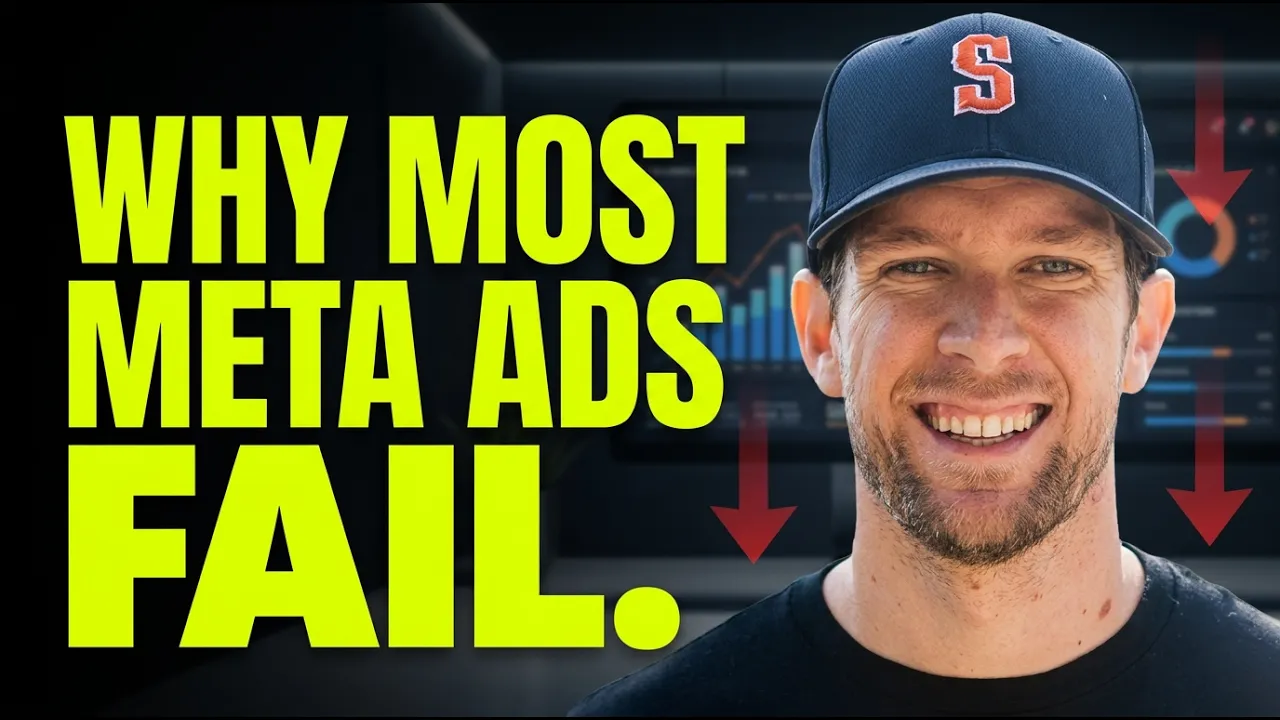
In this episode, Andrew Faris — founder of AJF Growth and host of The Andrew Faris Podcast — makes the case that most Meta advertisers lose by trying to outsmart an algorithm that's far better at the job than they are. He explains why you should kill your testing campaigns, run broad targeting and manual bids, and let Meta's machine learning force-rank your ads, while you focus on the things only a human can: financial targets, creative quality, and business context. Andrew breaks down the difference between value and volume optimization (and why so many accounts leave money on the table), which attribution window actually reflects incremental value, and why he thinks agentic media-buying tools are further off than the hype suggests. He also shares his approach to AI creative — make it obviously fake and entertaining rather than fake-realistic — and FPAR, the creative-operations metric he cares about most. It's a tactical, no-fluff masterclass for anyone running e-commerce growth on Meta.
Episode details
Transcript
Andrew Faris is the founder and CEO of AJF Growth, an agency that grows seven- and eight-figure e-commerce brands profitably on Meta, and the host of The Andrew Faris Podcast.
He has been buying media and building growth strategy since 2014 — as a media buyer, as head of strategy at Common Thread Collective, and as a CEO — working with brands across DTC and consumer. His whole approach is built on one idea: Meta’s ad platform is a machine-learning marvel, and your job is to harness it, not to outsmart it.
In this conversation, Andrew walks through the tactical decisions that separate good Meta accounts from bad ones: testing and scaling, targeting, bidding, attribution, AI creative, and the operational discipline behind producing creative at scale.
The gist
Meta is a hyperscale, probabilistic forecasting machine. The advertisers who win stop inserting themselves into its decisions and instead feed it clean financial targets.
Kill the testing campaign. Launch your ads together and let Meta force-rank them — a separate “creative testing” campaign is just permission to waste money.
Run broad targeting and manual bids. Creative is the real targeting; Meta largely ignores your audience selections anyway.
Value vs. volume is the optimization most accounts skip. Run the same ads in both — value optimization reaches better customers you’re otherwise missing.
Measure on 28-day click. It tends to approximate the true incremental value of your Meta ads — and great media buying is harder than it looks.
Meta is a forecasting machine — don’t fight it
Andrew’s answer to almost every tactical question starts from one first principle: understand what Meta actually is. It is a technological marvel running an auction across roughly three million advertisers, hundreds of millions of users, and billions of impressions a day, with a strong incentive to deliver every advertiser a positive return — because returns are what keep advertisers spending.
Meta solves that with massive machine learning. So the instinct of the “little old media buyer” to step in and tell Meta where to place ads, when to run them, and which to turn off is, in his words, crazy talk — it reflects a misunderstanding of the system. The better question is: how do I harness all of that compute and Bayesian logic for my account? The human’s job is to understand the financials, the business, inventory and cash dynamics, then structure the account so Meta can do what it’s great at.
Kill the testing campaign
Manually distributing budget to individual ads and judging them on a handful of purchases is, Andrew argues, a losing game — the samples are tiny and have no predictive value. Why force-rank ads yourself when Meta will rank them for you against the outcome you actually want? His advice is blunt: get rid of the testing campaign entirely, launch all your ads together, and let Meta sort out what to scale and what to suppress.
The “creative testing campaign” is especially silly, he says, because to Meta it’s just a campaign — renaming it doesn’t change anything except giving a media buyer permission to spend below target. Kill it, launch against your winners, and you shave a cost center off the business and drive more profit. On the worry that proven winners get an unfair advantage: that’s usually a good thing — it biases the account toward what works, and is only a problem if you have no winners or a hard time constraint like a sale.
Broad targeting, manual bids, and “creative is targeting”
Run broad. Interests aren’t just useless, Andrew says — Meta has effectively said it ignores your targeting and will go beyond your audience to find responders. It builds a lookalike at the ad level off whoever engages, which means creative is the targeting. You might segment by age or gender for brand reasons, but not for targeting efficiency.
He’s a long-time advocate of manual bids for the same reason: set the financial target (bid caps and target ROAS), hand it to Meta, and let it spend as much as it can while hitting that target. AJF runs nearly all prospecting on manual bids. His one big caveat, hard-won: it’s harder than it looks. AOV, attribution windows, sale moments, seasonality and account structure all add tricky math, and great media buying takes real craft.
Value vs. volume: the optimization most accounts skip
Andrew reframes a common question: highest-value, highest-volume and manual bids aren’t three separate things. There are two ways to optimize for conversions — lowest cost (a CAC optimization) or highest value per customer (a value optimization). Bid caps and cost caps are governors on volume spend; target ROAS is the governor on value spend.
The biggest, most consistent error he sees is accounts running zero dollars in highest value. Take your exact same ads, duplicate the setup, and switch from volume to value — you’ll pay higher CPMs for better traffic, higher AOV and higher conversion rates, and reach additional customers you were otherwise missing. AJF runs both for everything.
Attribution: optimize on click, measure on 28-day click
Andrew click-optimizes everything — a typical setup pairs seven-day-click target ROAS with one-day-click bid caps to reach the widest range of customers. He considers view attribution overwhelmingly misleading; it feeds Meta the wrong kind of signal. For measurement, he points to 28-day click ROAS, which — with a correctly set-up pixel and all the usual caveats — tends to approximate the true incremental value of your ads. He cited independent analyses suggesting true incremental value runs roughly 115–120% of seven-day-click, and turned to Pranav for Paramark’s view; on incremental attribution specifically, the takeaway was that it doesn’t work for everyone, but for some larger consumer and healthcare brands it has performed very well.
AI creative, agents, and the creative supply chain
On AI creative, Andrew likes a framing he credits to Taylor Holiday: don’t use AI to fake reality — use it as Hollywood-style CGI in your pocket to do entertaining, obviously-fake, highly engaging things. The hooky, clearly-AI clips outperform attempts to look real.
He’s skeptical that agents will take over media buying soon. An agent might beat a lot of mediocre buyers, but the domain context — seasonality, margins, product changes, a brand’s real outcomes — is hard to keep feeding it, and that’s where humans still matter. What he does preach is the creative supply chain: building an operation that outputs a high volume of diverse, genuinely good creative, fast and cheap. “Volume creative” doesn’t mean cheap and bad — it means good, at scale, with real diversity of message, style and format, while avoiding the iteration trap of one image with five headlines.
FPAR: the creative-ops metric Andrew loves
His favorite creative metric isn’t about creative performance at all — it’s about operations. FPAR (First Pass Approval Rate), a term he credits to his partners at Behind The Scenes Studio, measures how often ads from your design and edit team are approved the first time with no re-edits. Re-edits slow the machine; the higher the first-pass rate, the more shots on goal you take.
The way brands sabotage this is by calling work “off-brand” when they really just mean they don’t personally love it. Andrew’s fix: assume your designers are competent, then make it your job to document what on-brand actually means — increasingly as files an AI co-writer can use — so feedback is clear and the team can move fast.
Quote snacks
“Meta is a gigantic, hyperscale, probabilistic forecasting machine. My job is to leverage that for my account.”
“Get rid of your testing campaign. Just launch the ads together and let Meta sort out which ones to scale.”
“Creative is targeting. So you don’t need to target.”
“One of the biggest errors I see is accounts running $0 in highest value.”
“The whole point is make the creative good — then do as much of that as fast and cheap as possible, with as much diversity as possible.”
“I would be annoyed if I was your client and you weren’t defaulting into these things, because Meta probably knows more than you.”
Why it matters
For a podcast about the tension between brand and performance, Andrew represents the performance end at its most rigorous — and even here the lesson rhymes with the brand side: stop chasing short-term control, respect the time and systems that actually compound. His version is that the platform’s machine learning will out-optimize your manual tinkering, so your edge moves to the things it can’t do: financial clarity, creative quality, and operational throughput.
It’s also a useful counterweight to AI hype. Andrew is bullish on AI for creative and tooling, but skeptical that agents will replace the judgment and context great media buying requires any time soon. The throughline: know exactly what the machine is good at, and spend your human effort everywhere it isn’t.
Practical next steps
Turn off your testing campaigns. Launch your ads together against your winners and let Meta force-rank them.
Run broad and lean on manual bids. Set bid caps and target ROAS, and treat creative — not audience selection — as your targeting.
Add a value-optimized campaign. Duplicate your exact ads, switch volume to value, and capture the better customers you’re missing.
Measure on 28-day click. Use it as your best read on true incremental value, and be skeptical of view attribution.
Build a creative supply chain. Optimize for a high first-pass approval rate (FPAR) and document what “on-brand” means so your team can ship diverse, good creative fast.
Test incrementality on complex media mixes. If you’re running TV plus Meta, run holdout-based incrementality tests rather than trusting platform-reported numbers.
More sharp conversations



The sharpest marketing conversations, straight to your inbox
By providing your contact info, you agree to receive communications from Paramark. You can opt-out at any time. For details, refer to our Privacy Policy