The Brandformance Podcast • Ep 64
How Gamma built one of AI's fastest-growing marketing teams

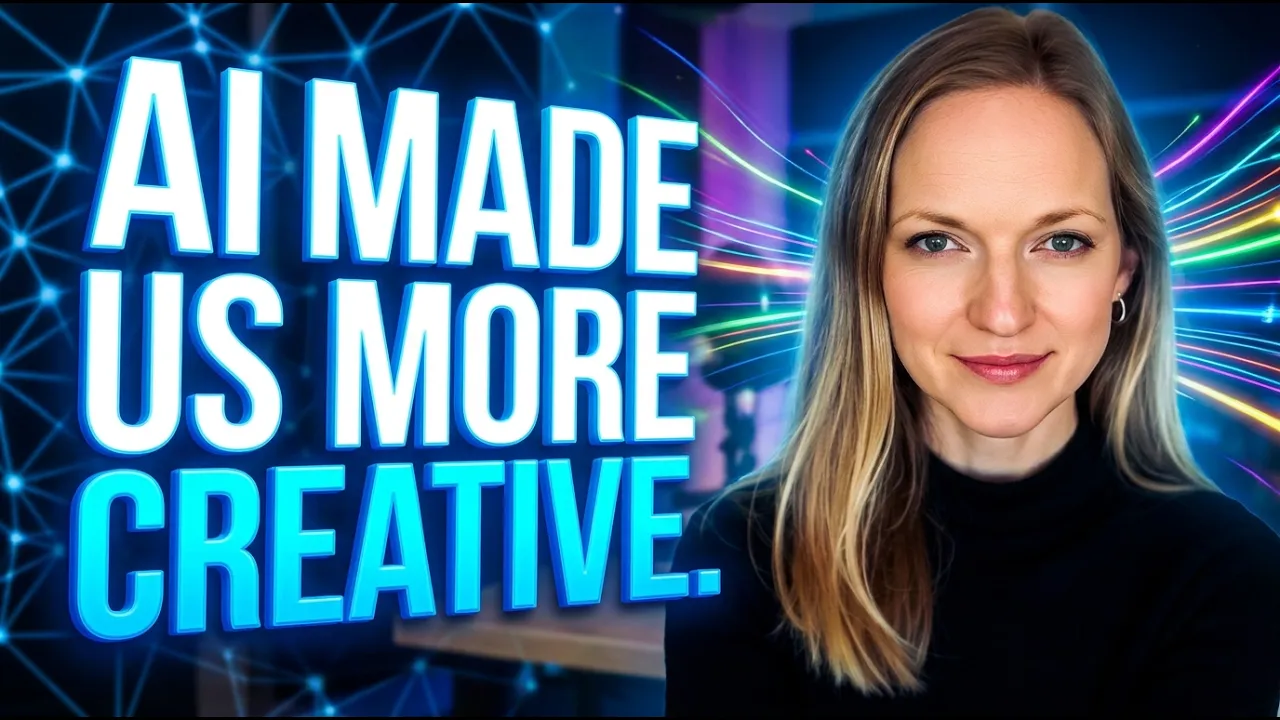
In this episode, Kristin Fracchia — Head of Marketing at Gamma, the AI presentation and website platform with nearly 100 million users — breaks down what it takes to run marketing inside a hypergrowth AI startup where the playbooks expire every quarter. She explains why an AI, product-led company still needs salespeople and human trust, how she staffs a ten-person team of generalists who each spike on brand, growth, or product marketing, and why she plans in a “narrative arc” rather than annual plans. Kristin digs into Gamma's creator engine — 300 to 400 influencer posts a month — and the thinking behind stunts like the nation's first large-scale drone-and-projection show in San Francisco, planned in five weeks. She makes the case that doing things faster with AI isn't the point (the job to be done is), and that the real edge is soul, taste, and solving real problems. She closes on the trait she now hires for above all else: plasticity.
Episode details
Transcript
Behind the expert
Kristin Fracchia leads marketing at Gamma, the AI platform for presentations, websites, documents and more, with nearly 100 million users worldwide.
Gamma was founded in 2020, took off with its AI launch in 2023, and has been on a hypergrowth trajectory ever since — and Kristin joined the ride in 2025. Before Gamma her background skewed analytical (SEO and performance marketing), but her path is anything but linear: she holds a PhD in drama and theater, which she credits for teaching her to absorb and synthesize huge volumes of information.
In this conversation, she opens up the marketing operating system of a hypergrowth AI startup — team design, planning, creator marketing at scale, real-world stunts, and the mindset it all requires.
The gist
In AI, business timelines are compressed — a three-year plan is now nine to twelve months, and annual playbooks are useless.
Even a fast-growing, self-serve AI company needs salespeople and human trust, because people learn new tools from other people.
Kristin staffs a small team of generalists who each spike on brand, growth, or product marketing — and everyone uses AI.
Creator marketing (300–400 posts a month) and real-world stunts win because trust and human connection are scarce.
Doing things faster with AI isn’t the point — the job to be done is. The trait she now hires for above all is “plasticity.”
Why an AI, self-serve company still needs salespeople
Gamma is on the classic prosumer-to-business journey — individual users, a free way to start, a groundswell of viral love, then teams and businesses — and it launched teams and business plans in late 2025. Pranav pushed on the obvious question: if it’s self-serve, why hire salespeople instead of letting companies expense it on a credit card? Kristin’s answer is trust and education. There’s no substitute for sitting side by side with someone on a laptop while they learn a new tool, and AI simply isn’t at the point where it can run the full sales and procurement process for mid-market and enterprise buyers.
Fast development cycles make it worse (in a good way): every new model or feature unlocks new ways to use the product, so a business that “knows how to use Gamma” is out of date three months later. That’s why Gamma runs Gamma Lab cohorts, workshops and globally scaled events — humans getting other humans excited and constantly re-educated — on top of the robust self-serve business. And in a market full of security-leak headlines, being visibly trustworthy human beings matters when buyers are bringing their data into an AI tool.
Building (and planning for) an AI-native marketing team
Kristin admits that a few years ago she was bored with marketing; now she’s all back in, energized by a resurgence in real-world creativity and by feeling “superhuman” building things with tools like Claude Code. Her ten-person team is deliberately generalist. She augments with specialists only where the tools demand it — paid search and social, lifecycle, a recently hired creator-partnerships lead — and hires everyone else for flex and range. What she screens for is a spike in one of three areas: brand (heart, soul, creativity), growth (channels and loops), or product marketing (understanding and being understood by the market). Everyone, including the creative director, is expected to use AI.
Planning matches the pace. There’s a company annual plan and, for marketing, a “narrative arc” for the year — where Gamma is seen today and where she wants it a year out — but beyond that it’s quarterly at most. She won’t plan more than two to three months ahead, and thinks it would be a mistake to try; work is organized as task forces assembled around the next launch rather than year-long playbooks.
The creator engine: 300–400 posts a month
Gamma’s first scaled channel was creator and influencer marketing, and it started with CEO Grant Lee personally onboarding a handful of social influencers before the AI launch. It works because people love sharing AI tips, so there’s built-in organic virality — and because the best-performing content isn’t a brand name-drop but genuine user education (“here’s how I built this automated workflow”) for a highly visual product.
Today the program runs 300–400 influencer posts a month across agencies and contractors. Kristin is adamant it isn’t transactional: they work with people who actually love and use Gamma, activate employee-generated content, and support their huge user base in sharing how the product helps them. It’s a creators’ market now, with power shifted toward creators, so agencies earn their keep by knowing each platform and cultivating trusted relationships — while Gamma’s job is the briefs, tutorials and training that show creators the best of the product. (The briefs, naturally, are built in Gamma.)
Stunts with soul: the SF drone show
Gamma’s most ambitious 2025 stunt was the nation’s first large-scale integrated drone-and-projection show — a projection on San Francisco’s Ferry Building with a drone show above it, drawing 4,000 people (and the mayor), with heavy online and news distribution. It was planned in about five weeks, which was only possible because it was opportunistic: another brand had already done the permitting and mapping and then backed out, Gamma had a fresh, playful rebrand to show off, and SF Tech Week guaranteed the right crowd. Users even submitted and voted on the ideas that went into the sky.
Crucially, Kristin measures these swings like the analyst she is. She thinks in CPMs and impact: what would the same impressions cost through paid social, and how much more valuable is the impression from someone who stood there and loved it? Paid media isn’t a constant part of the process; a drone show is an investment expected to produce enterprise deals and impressions that last for years, not a leap of faith.
“Everything everywhere all at once” — and the soul of Gamma
Scaling upmarket doesn’t feel like the old prosumer-to-enterprise ladder. Demand is inbound, so the pressure isn’t generating pipeline — it’s getting SOC 2, SSO and backend scale ready fast enough to serve it. Fast-growing AI companies face “everything everywhere all at once”: bottoms-up groundswell and top-down AI-transformation mandates at the same time, without the luxury of years to learn.
With competitors racing to be everything (“everyone’s everything now”), Kristin’s answer is soul. More content for content’s sake isn’t the goal; doing things faster with AI isn’t the point — achieving the job to be done is. Gamma, she argues, isn’t a thin wrapper around an LLM: it rebuilt 40-year-old presentation software into something interactive, mobile-first and better, then added AI on top. As models improve and anyone can prompt a deck, the edge becomes context, memory, taste and real ROI — being the best tool for the job in a market she believes is expanding, not consolidating.
Plasticity: the trait she hires for now
Asked what she’d tell her younger self to stop worrying about, Kristin points to her old obsession with playbooks and plans. She’s swung hard the other way — a playbook you launch in spring won’t work for the fall, and one that works in AEO today won’t survive the next model — leaning more on vision and intuition than she used to.
The word she’s landed on, borrowed from material and neuroscience, is plasticity: the ability to be stretched and reshaped without breaking. It’s the number-one thing she looks for in hires and cultivates in herself, because this is a world-changing technology and the people who thrive are the ones who can keep changing shape rather than crumble under the pace.
Quote snacks
“This is the new normal. Everybody is an AI company — you have to be.”
“There’s no substitute for having an audience in a room, sitting side by side on a laptop, when you’re learning new technology.”
“Nobody can have playbooks or plans for an entire year right now.”
“Taste comes from being observant, absorbing information, and finding the through-lines.”
“Doing things faster with AI is not the point. The point is you have a goal, a job to be done.”
“Everybody needs to be able to be plastic — to change without completely breaking.”
Why it matters
Kristin’s Gamma is a live case study in what “brandformance” looks like at AI speed. The performance instincts are all there — CPMs, ROI, trackable channels — but her biggest bets are brand: a drone show, a rebrand, IRL community, creator trust. She refuses to treat them as opposites, measuring brand moments with a performance lens while insisting that soul and taste are the real moat once AI commoditizes speed.
Her deeper point is organizational. When timelines compress and playbooks expire quarterly, the durable advantage isn’t a plan — it’s a team (and a leader) built to keep reshaping. In a market where everyone can suddenly do everything, the winners will be the ones who stay clear on the job to be done and plastic enough to change how they do it.
Practical next steps
Pair self-serve with human education. Even a PLG AI product needs people teaching people — cohorts, workshops, events — especially as features ship faster than customers can absorb them.
Hire generalists who spike. Build a small team where each person is top-percentile in brand, growth, or product marketing, and augment with specialists only where the tools require it.
Plan in a narrative arc, not a playbook. Set a yearly North Star, then plan quarterly at most, and organize work as task forces around the next launch.
Invest in creators and trust. Work with people who genuinely use your product, activate employees and users, and give creators great briefs and tutorials rather than transactional posts.
Measure brand stunts like an analyst. Compare a stunt’s cost-per-quality-impression to paid social, and expect big swings to produce real outcomes.
Hire for plasticity. Screen for people who can be stretched and reshaped without breaking — the core skill for an AI-native org where the playbook keeps changing.
More sharp conversations



The sharpest marketing conversations, straight to your inbox
By providing your contact info, you agree to receive communications from Paramark. You can opt-out at any time. For details, refer to our Privacy Policy