
The Brandformance Podcast • Ep 62
Why the smartest brands are investing in affiliate marketing

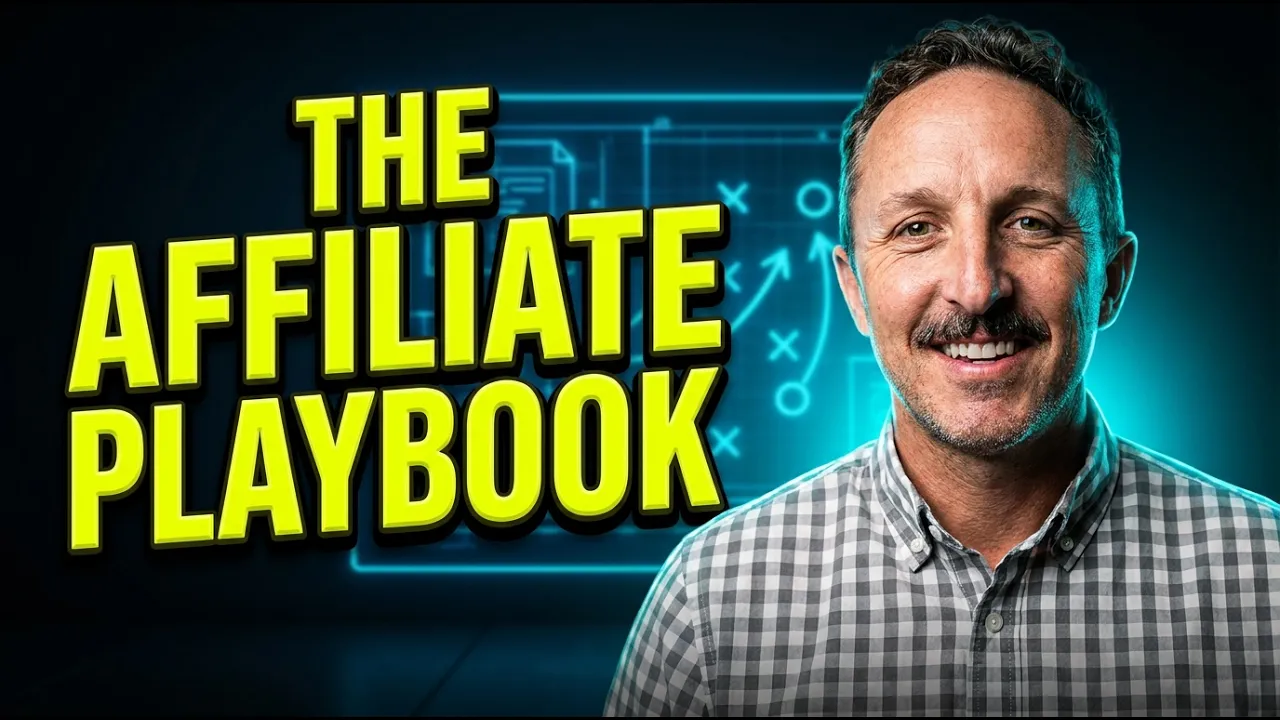
In this episode, Tye DeGrange — founder and CEO of Round Barn Labs — makes the case that affiliate and partner marketing, done right, is a trust-building channel rather than the “bottom feeder” its reputation suggests. He explains why the modern trust gap creates an opening for authentic third-party partners, why affiliate is better understood as a multi-channel lever with 15+ partner types than a single channel, and how incentives quietly determine outcomes. Tye digs into the measurement problems that plague the channel — why server-to-server tracking beats pixels, why last-click rewards the wrong partners, and how to feed impression data into marketing mix models. He shares standout campaigns (eBay Motors’ multi-year Bring a Trailer build; an 81% traffic lift from a single mid-tier YouTube creator for Atlassian) and the misconceptions that keep brands from managing affiliate like the real channel it is. It's a practical tour of a channel most performance marketers underrate.
Episode details
Transcript
Behind the expert
Tye DeGrange is the founder and CEO of Round Barn Labs, one of the leading partner-marketing agencies, and the host of the Always Be Testing podcast.
He has spent more than 20 years in performance marketing — starting with early ad networks like Commission Junction, running eBay’s motors affiliate program, and growing StubHub — and has since built and scaled partner programs for Atlassian, Grammarly, Oculus and TikTok, driving more than $500M in attributed revenue for clients.
In this Office Hours conversation, Tye makes the case that affiliate and partner marketing, done right, is a trust-building channel rather than the “bottom feeder” its reputation suggests — and walks through how to structure, manage and actually measure it.
The gist
We live in a trust gap, and authentic third-party partners are well-positioned to fill it — a complement to ads, not a replacement.
Affiliate is better understood as a multi-channel lever with 15+ partner types than as a single channel.
Incentives determine outcomes. Pay-for-action is the appeal, but last-click over-reliance quietly rewards the wrong partners.
Measure with server-to-server tracking, a multi-touch view, and — the holy grail — impression data fed into your MMM.
It’s not set-and-forget. Affiliate needs active management, and takes roughly twice as long as Meta or Google to ramp.
Why affiliate now: the trust gap
Tye’s “why now” starts with a macro observation: across government, media, business and leadership, trust isn’t what it used to be — the kind of erosion Edelman tracks year over year. At the same time, buyers have more technology, more peer discovery and more self-serve ability than ever, evaluating a consumer or SaaS product long before they take a call or land on the website.
That combination is the opening. Ads still matter and belong in the playbook, but the trust gap creates room for authentic, relevant third parties to say why a brand is worth considering. His thesis: partnerships, affiliate and influencer — done the right way — can bridge that gap in a way brand-owned messaging can’t, because it’s a third party speaking about the brand rather than the brand speaking about itself.
It’s a lever, not a channel
Affiliate has a checkered past and, Tye admits, deserves some of the scrutiny — it goes wrong through misaligned incentives, fraud, and over-reliance on legacy last-click players. But structurally he sees affiliate, partner and influencer as variations on the same pay-for-performance mechanism, and the channel itself as far broader than coupons and deals.
Partners are the currency (and the R&D) of the ecosystem: from one-person operators to Rolling Stone, Entrepreneur and USA Today; from G2 as the “head” of SaaS review sites to a long tail of comparison content, loyalty, gated communities, podcasts, connected TV and newsletters. That’s why he calls affiliate less a channel and more a multi-channel lever — one where you pay on performance for access to hundreds or thousands of partners across ~15 types.
Show me the incentive (and the last-click trap)
On incentives, Tye leans on Charlie Munger — “show me the incentive and I’ll show you the outcome.” The appeal of affiliate is that you pay on an action tied to your North Star metric, whether a percentage of a transaction or a flat fee for a qualified lead. You want public offers at competitive parity (if competitors pay a 10% commission, that’s your guide) and something better on the back end for your best partners.
The danger is reading a single layer of data. Last-click, exacerbated by the payment model, quietly funnels credit to late-funnel “cookie monsters” — browser extensions, coupon and loyalty players who show up after the buying decision is already made. They’re not worthless, but crediting them as the primary reward mechanism creates too many incentives to do the wrong thing.
Measurement: server-to-server, multi-touch, and the MMM holy grail
Tye’s first measurement rule is to set up server-to-server (API) tracking from the beginning rather than relying on pixels — a lesson a multi-billion-dollar fitness-device company learned the hard way when its cookie-consent system broke pixel-based affiliate tracking entirely. Server-side tracking survives multiple devices, browsers and privacy regimes, and for SaaS, CRM integration validates MQL/SQL actions accurately — which matters enormously in a pay-for-performance model.
From there: move past last-click to a multi-touch view with stand-down rules, so an upper-funnel partner who genuinely introduced the customer gets credit instead of the extension that caught the final click. The holy grail, in his view, is capturing impression/exposure data and feeding it into a marketing mix model — because out-of-the-box MMM doesn’t play well with a last-click, non-impression affiliate model. Set it up right and you can actually start to see whether affiliate is incremental.
What “doing it right” looks like
His favorite example is eBay Motors and a then-rising blog, Bring a Trailer. Post-recession, the goal was to get people thinking about auto parts on eBay, so they teamed up on a multi-year series: strip a 1960s Corvette to nothing and rebuild it using only eBay parts, with the enthusiast community crowdsourcing the commentary. Engagement was off the charts, parts revenue rose into the millions, and the partner — not just the brand — was the hero of the story.
A very different case: Atlassian. A single mid-tier YouTube creator (“Alvin the PM,” ~50k subscribers) doing candid, authentic reviews of Confluence for product managers drove an 81% traffic increase and a ~46% lift on the core North Star metric — on top of an existing baseline. His lesson: high-relevance, mid-sized creators often beat massive accounts, because audiences no longer fully trust the reads from the biggest players.
Can you run incrementality on affiliate?
Pranav framed the hard part: you can’t run a clean geo holdout in affiliate because you don’t control where the viewership happens. Tye’s answer is to change the incentive as a test — an “if-then” with partners (“you’re on track to grow 25% in October; if you could grow 50%, what would you do, and what reward would justify it?”) and measure the inflection as a pre/post.
With the right high-trust, high-volume partners, real holdouts are possible — serving something to one audience and not another — though it’s uncommon. And at eBay they ran before/after “pause” tests with a data-science team, the kind of quasi-experiment that makes purists wince but produces genuinely surprising results. The theme: work around affiliate’s measurement imperfections rather than pretending they don’t exist.
The misconceptions worth retiring
Tye’s list: watch network incentives (they earn on commissions, so be wary of dialing payouts to the hilt); reject the passive mindset — you can’t “build a beautiful car” and expect it to drive itself, and affiliate takes roughly double the ramp time of Meta or Google; and drop the “bottom feeder” framing, which comes from over-reliance on coupon/deal playbooks rather than the storytelling and trust-building the channel can deliver.
He’d also retire “affiliate is only for consumer” (SaaS affiliate has exploded), the idea that it’s just coupons (there are 15+ partner types beyond deals), and complacency about fraud (it comes in waves and needs active management, not channel avoidance). Increasingly, affiliate is also showing up well in GEO and LLM citations — a halo effect on organic discovery that’s becoming part of the case for the channel.
Quote snacks
“It’s a third party speaking about the brand, as opposed to the brand speaking about themselves.”
“It’s less of a channel and more of a multi-channel lever.”
“You’ve got that 80/20 rule on steroids in affiliate.”
“Out-of-the-box MMM doesn’t play well with a last-click, non-impression affiliate model. It’s the inverse of what you want.”
“You can’t just say, ‘I built this beautiful car, here you go’ — someone has to drive the vehicle.”
“If the partners are given the right inputs, the partner is the hero of the story.”
Why it matters
Affiliate sits awkwardly in the brand-versus-performance debate: it’s paid on performance, but its best work — the eBay build series, an authentic creator review — is brand storytelling that compounds trust. Tye’s reframing is that treating it purely as a last-click performance channel is exactly what makes it look like a bottom feeder; treated as a managed, trust-building lever, it does the opposite.
It also lands on the show’s recurring measurement theme. The channel resists clean geo experiments, so you triangulate — server-to-server accuracy, multi-touch views, impression data in the MMM, and incentive-based pre/post tests — and you accept that being a little less wrong beats pretending last-click is truth.
Practical next steps
Treat affiliate as a managed lever, not set-and-forget. Give it a real owner and expect roughly double the ramp time of Meta or Google.
Set up server-to-server tracking from day one, and add CRM integration if you’re SaaS to validate MQL/SQL actions.
Move beyond last-click. Build a multi-touch view with stand-down rules so upper-funnel introducers get credit.
Feed impression data into your MMM. Require exposure data from key partners so you can actually assess incrementality.
Test scale with incentives. Run incentive-based pre/post tests, or true holdouts with savvy high-trust partners, to see how far affiliate can stretch.
Segment partners and manage the top tier. Monitor high-volume partner content, run active fraud management, and mine the long tail for underused “diamonds in the rough.”
More sharp conversations



The sharpest marketing conversations, straight to your inbox
By providing your contact info, you agree to receive communications from Paramark. You can opt-out at any time. For details, refer to our Privacy Policy