
The Brandformance Podcast • Ep 66
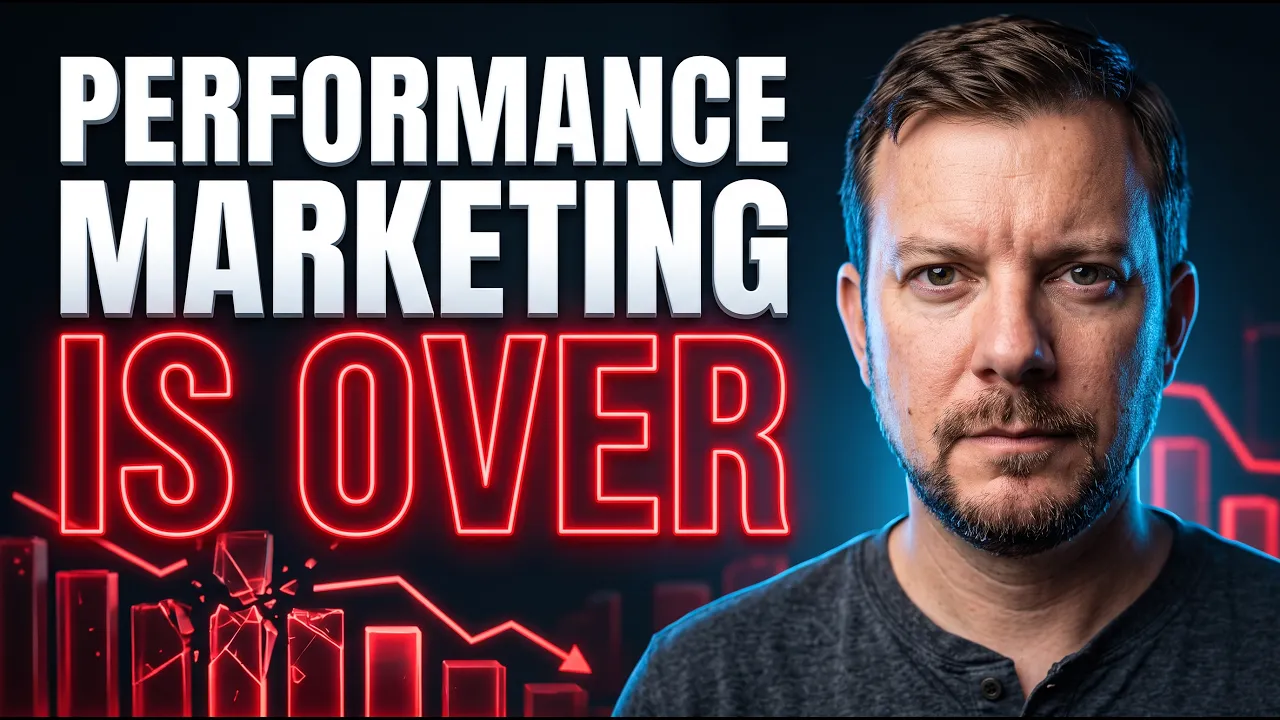
Why the performance era is over

In this episode, Peter Sengenberger makes the case that the performance-marketing glory days are over. He's a 25-year direct-response and media veteran who cut his teeth on infomercials and P90X, most recently led demand gen, brand and social at BambooHR, and now works with Global TV Experts. He argues that digital algorithmic buying has become a saturated oligopoly where you're 'playing against the house,' and that the brands who survive built measurement independence before the math stopped working. Peter breaks down what B2B can learn from direct response (start with 'what's in it for me' and quantifiable claims), why TV still wins on attention and legitimacy, and how he built BambooHR's brand awareness through linear TV, CTV, audio and sports sponsorships. He gets tactical on measurement: Nielsen, share of voice, quarterly brand-lift studies, geo holdouts, and MMM as a recent game-changer, plus the CTV fraud that plagues the channel. It's a wide-ranging tour from a marketer who's been buying media since 1998.
Episode details
Transcript
Behind the expert
Peter Sengenberger has spent more than 25 years in advertising, across DTC, infomercials, consumer and B2B. He now works with Global TV Experts and writes the Grow with Peter Substack.
He started in the infomercial business in the late 1990s, importing and localizing American infomercials in Japan and then running media in the UK. For about a decade he was P90X and Beachbody’s agent across the UK and Europe. Most recently he led Demand-Gen, Brand and Social at BambooHR, where he built the company’s first national TV campaign.
That path, from pen-and-phone airtime deals to modern B2B measurement, gives him a long view on the brand versus performance question, and a contrarian take on where advertising is going.
The gist
The performance-marketing glory days are over. Digital algorithmic buying has become a saturated oligopoly, and Peter’s line for it is that you’re playing against the house.
B2B should borrow from direct response: lead with “what’s in it for me,” back it with quantifiable claims, and make a clear offer.
TV wins on attention and legitimacy. View-through completion runs well above 90%, while a lot of digital sits in the teens.
The brands that survive built measurement independence before the math stopped working. That means adaptive, mostly in-house, trust-but-verify measurement.
You can’t build a national brand at scale on digital alone, which is why firms are going back to TV, radio, sports and out-of-home.
From infomercials to P90X
Peter learned advertising through the infomercial. In Japan he localized American products, dubbing them, pricing them in yen, and routing orders through local call centers. Then he ran media in the UK, and spent roughly a decade as Beachbody and P90X’s agent in Europe. The whole business ran on underpriced, perishable linear airtime. You bought blocks next to a bigger name, talked a channel up from an 8am half-hour to a 9am slot, and closed on relationships. He calls it a pen and a phone. What hooked him was the speed of the feedback. A unique phone number gave you one-to-one attribution and a fast, honest answer.
He picked up the direct-response CTA formula from Beachbody’s Carl Daikeler and Jon Congdon: a product with wide appeal, easy to understand, at least a 5x margin, and an entry point to a larger ecosystem of upsells. From there you build value, and urgency and scarcity do a lot of the work, like the ticking “call in the next 15 minutes.” Infomercials themselves have shrunk as Amazon and instant delivery killed the urgency. The psychology didn’t die, though. You can see it now in live shopping and TikTok Shop.
What B2B can learn from direct response
Moving into B2B was a bigger jump than Peter expected. Different customer, longer cycle, logic over impulse, higher stakes. He thinks B2B carries a healthy inferiority complex about its creative, and that direct-response marketers really are closer to the customer. His one-line fix, the thing colleagues groan to hear him repeat, is to paint “what’s in it for me?” on your monitor and answer it at every step, in the creative, the value prop, the funnel. B2B tends to bury the benefit under how great the company is. Infomercials pile the benefit on again and again.
Two things make that concrete. First, quantifiable claims. At BambooHR he introduced “superiority claims” aimed at a C-suite audience, money saved for the CFO, time saved for HR, and claims you can actually back up, because the invented ones end in tears. Second, a clear offer. Spell out plainly what someone gets for clicking or watching, with no ambiguity, because most marketers confuse customers and then wonder why performance never shows up.
Inside BambooHR: going full-funnel with TV
BambooHR was a well-run company investing mostly at the bottom of the funnel, and it knew it needed to reach more people more often. Peter came in for brand awareness, with reach in newer mediums like TV, audio and sports sponsorships, while also running paid-social demand gen for near-term ROI. The existing toolkit was 100% digital and accountable, but as he puts it, not all impressions are created equal.
His case for TV comes down to attention and legitimacy. On-the-wall TV view-through completion runs well above 90%, since you’re watching rather than scrolling, while a lot of digital would be lucky to hit the teens. TV also confers credibility at a time when people don’t believe what they see online and deepfakes are making that worse. Context compounds it. Buy Monday Night Football and you’re next to the F-150 ad, where a little of the fans’ affinity for the team rubs off on you. Do that at enough scale and the audience becomes a much softer sell.
The media mix and the CTV landmine
Peter ran linear, CTV and audio, and put the majority of the budget into linear TV. It’s cheaper, it indexes high for the ICP, and the audience skews older, more senior, more affluent and more attentive. CTV is powerful but a lot pricier on a CPM basis, and he calls it a landmine-ridden environment of quality and players. The fraud is real. Studies suggest up to 20% of ads are served to TVs that are off, and Pranav’s war story of a customer whose CTV spend ran 90% between midnight and 6am makes the point.
What he does like about CTV is targeting. You can pull high-indexing lookalike pools from platforms like LinkedIn and flex them into the living room. He was a strong advocate of LinkedIn’s CTV for that reason, even though its reporting lagged, and he stayed disciplined about premium placements over cheap exposure. CTV’s once-premium $35 CPMs, he notes, have since fallen into the teens.
Proving the brand case
Peter’s first move at BambooHR was unpopular: arguing the company had an awareness problem despite its 20-year legacy and high NPS. He backed it with agency pitches, independent research and their own lift studies, plus the deep infrastructure of the offline world. Nielsen is still the gold standard and North Star. A century of TV transactions means you know who’s watching, for how long, and exactly where competitors place ads and what they pay. On a share-of-voice and TRP basis, BambooHR was being outspent, so he didn’t dip a toe. He dedicated budget for maximum reach and, in his words, turned on the attention engine like a warm heater.
Then he measured it. Quarterly, well-constructed brand-lift studies looked at aided and unaided awareness plus sentiment, run mostly in-house by a talented data scientist, with some CTV geo holdouts to confirm the message was getting through. Brand builds mental equity over time, which is why it’s hard to measure. His Geico gecko example makes the point: you can like a brand you’ll never buy. He points to two books he swears by, Binet and Field’s The Long and the Short of It and Byron Sharp’s How Brands Grow.
The performance era is over, so build measurement independence
Peter’s headline claim is that the digital glory days are done. He’s been buying performance media since 1998, and what he sees now is saturation. A few outlets form an oligopoly, the hacks have been starched out of the market, most marketers under 40 do the same crowded algorithmic buying, CPMs keep climbing, and black-box products like Performance Max and Andromeda tilt further toward the platforms. In algorithmic buying, they built the algorithm, not you. You’re playing against the house, and the house always wins.
His prescription is measurement independence, built before the math stopped working. You can’t buy measurement off the shelf. It has to be adaptive and customized to what you sell. Be disciplined and consistent with one North-Star methodology, but keep checking your assumptions and looking over the fence. On tools he’s a “check all the above” guy: first, last and multi-touch, incrementality and MMM each have something to add. MMM in particular was a game-changer for him over the last 18 months, surfacing insights you can’t see without big data at scale. He’s also been promised plenty of silver bullets that never came up heads.
Going back to TV
What Peter is watching now is media maturity. He saw a DTC aggregator he worked with, 13 brands, each with its own Shopify, Amazon and ad accounts, die on the vine as the pandemic DTC pop faded into structural contraction. The pattern he keeps seeing is firms across every industry expanding beyond digital, back to sports sponsorships, TV, radio and a little out-of-home, and spending real money there, because you can’t build a national brand at scale on digital alone.
Part of the reason is that most marketers under 40 have never bought anything but digital and assume there’s nothing else. Meanwhile offline offers lower CPMs and a lot of scale, and digital’s returns and trackability are both slipping, so you can’t believe everything in your dashboards. His advice is to layer in more media types, test humbly, listen to what’s happening on the phones, and get an honest read on how you actually show up in the market.
Quote snacks
“You’ve got to keep asking yourself: what’s in it for me?”
“In algorithmic buying, they built the algorithm, not you. So you’re playing against the house.”
“View-through completion for on-the-wall TV is well above 90%. For a lot of digital, you’d be lucky to get into the teens.”
“Up to 20% of CTV ads are being served to TVs that are off.”
“The brands that survive will be the ones that built measurement independence before the math stopped working.”
“There is simply no way to build a national brand at scale with only digital media. You can’t do it.”
Why it matters
Peter has lived both ends of the brand versus performance spectrum, from one-to-one infomercial attribution to national TV brand-building, and his conclusion is a warning to performance-first teams. As algorithmic channels saturate and turn into black boxes, the advantage shifts back toward attention, legitimacy and reach, which is what offline media still delivers.
The catch is measurement. Going back to TV only works if you can prove it, and the platforms won’t hand you the truth. His version of measurement independence, adaptive, in-house, triangulated across incrementality and MMM, and skeptical of every dashboard, is what lets a brand invest with confidence in the channels the algorithms won’t optimize for you.
Practical next steps
Lead with “what’s in it for me.” Answer it in every creative, value prop and funnel step, especially in B2B, where the benefit tends to get buried.
Make quantifiable claims and a clear offer. Back your claims with data you can defend, and spell out plainly what the customer gets.
Add attention-rich media. Test TV, audio, sports or out-of-home for reach and legitimacy, and hold out for premium placements over cheap exposure.
Be paranoid about CTV quality. Watch for off-screen and overnight delivery, insist on transparency, and use platform targeting like LinkedIn lookalikes to stay premium.
Build measurement independence. Keep it adaptive and mostly in-house, pick one North-Star methodology, triangulate with incrementality and MMM, and verify your assumptions often.
Prove brand with lift studies. Run consistent quarterly aided and unaided awareness and sentiment studies, use share-of-voice benchmarks, and add geo holdouts where you can.
More sharp conversations



The sharpest marketing conversations, straight to your inbox
By providing your contact info, you agree to receive communications from Paramark. You can opt-out at any time. For details, refer to our Privacy Policy