
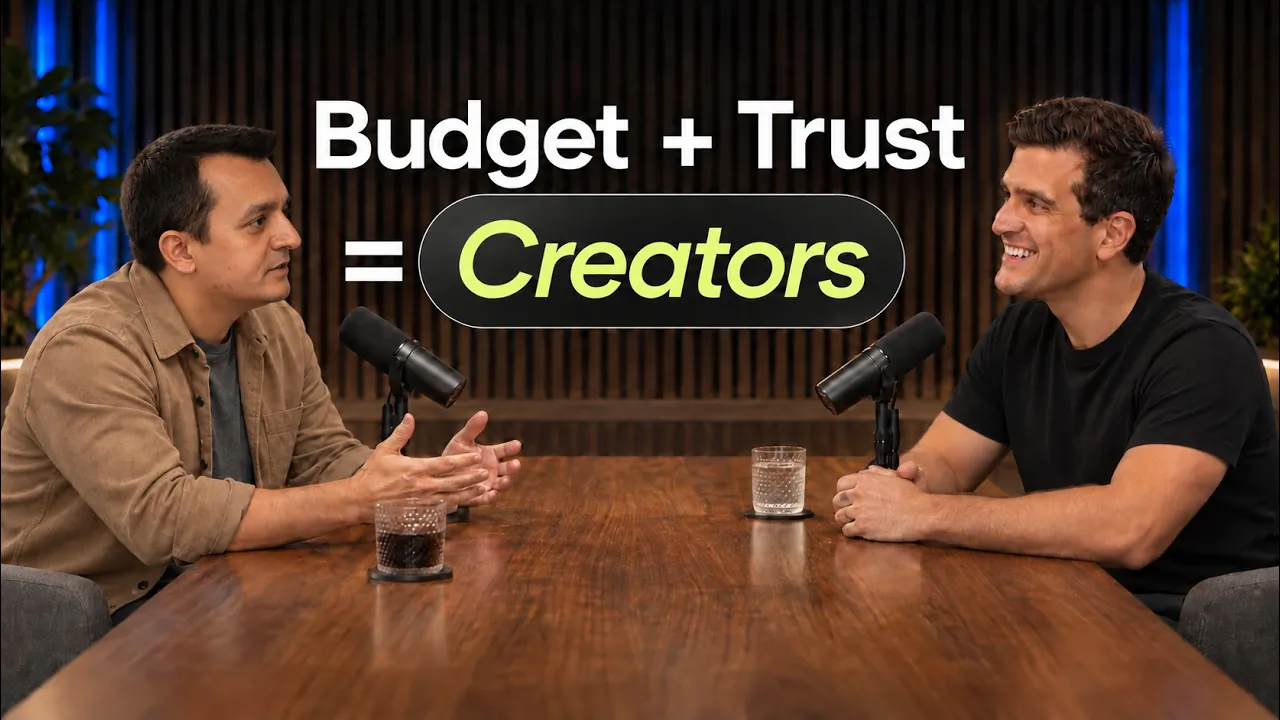

The Brandformance Podcast • Ep 70
Why Enterprise Brands Are Shifting 50% of Budgets to Creators

“Half of attention now lives on creator content on digital. … We as consumers trust creators 70% more than brands.”
– Arthur Leopold, CEO & Co-founder of Agentio
Episode Insights
Transcript
In this episode, Pranav sits down with Arthur Leopold, CEO and co-founder of Agentio and former president of Cameo, to talk about why creators are suddenly on every big advertiser’s media plan. Arthur has spent the last few years building the infrastructure for brands to buy creator media the way they buy search or social.
They get into what’s driving the shift, why creator content earns a kind of trust that brand ads can’t, how a brand spending $10–20M a year should start a creator program, and how to tell whether it’s working.
Key takeaways
Unilever made creators an enterprise conversation. When Unilever’s CEO set a goal to move half its marketing spend to creators, the channel jumped from challenger brands to the world’s largest advertisers.
Attention moved. Budgets didn’t. About half of digital attention sits on creator content, and consumers trust creators 70% more than brands. Yet creators get only a couple percent of ad spend, and Arthur says that gap gets harder to defend in every board meeting.
Trust is what you’re buying. People scroll past anything that looks like a brand ad. A partnership ad borrows a creator’s earned trust, and Meta’s own research puts it at 19% better efficiency than brand-run ads. As AI content floods feeds, that trust becomes worth more.
Influencer is not creator. Platforms limit reach on sponsored posts they don’t get paid for, so the old hashtag post stopped working. The creators who win now have built real authority with an audience, and that authority is what carries a brand message.
Measure creator as its own channel before you scale it. Lumped in with everything else, creator gets judged on last-step conversions and misses the people who buy a day or a week after hearing about a product. Arthur’s first rule is to have MMM-style measurement in place first.
Skip both ends of the barbell. Mr. Beast is a one-of-one, and thousands of nano creators lack the authority to carry a message outside their own world. Start with mid-sized creators and test across several verticals.
Let the creators do the targeting. Grüns found that a Maine lobster fisherman was a top performer for over a year. That opened up crab fishermen, ranchers and farmers, an audience no marketer in the room would have picked. Test outside your core demo and message.
Start on YouTube long-form. A 90-second host-read integration holds 85–87% of viewers. Because creators post weekly or less, that inventory is scarce and still underpriced, as long as you can measure the full funnel and accept some early testing.
Standard pricing turns creators into a real media buy. Pricing as the brand’s CPM times the creator’s 30-day views replaces the old routine of a $50K ask that settles at $5K after a month of emails.
The moat is match, liquidity and measurement. Raw creator data is cheap now; Arthur says an agent could rebuild a creator database in a few hours. What matters is pairing the right creators with the right brands, having enough supply to fill real budgets, and proving the results.
More sharp conversations


The sharpest marketing conversations, straight to your inbox
By providing your contact info, you agree to receive communications from Paramark. You can opt-out at any time. For details, refer to our Privacy Policy


