
The Brandformance Podcast • Ep 59
How Iterable’s CEO thinks about the “hardest job in the C-suite”

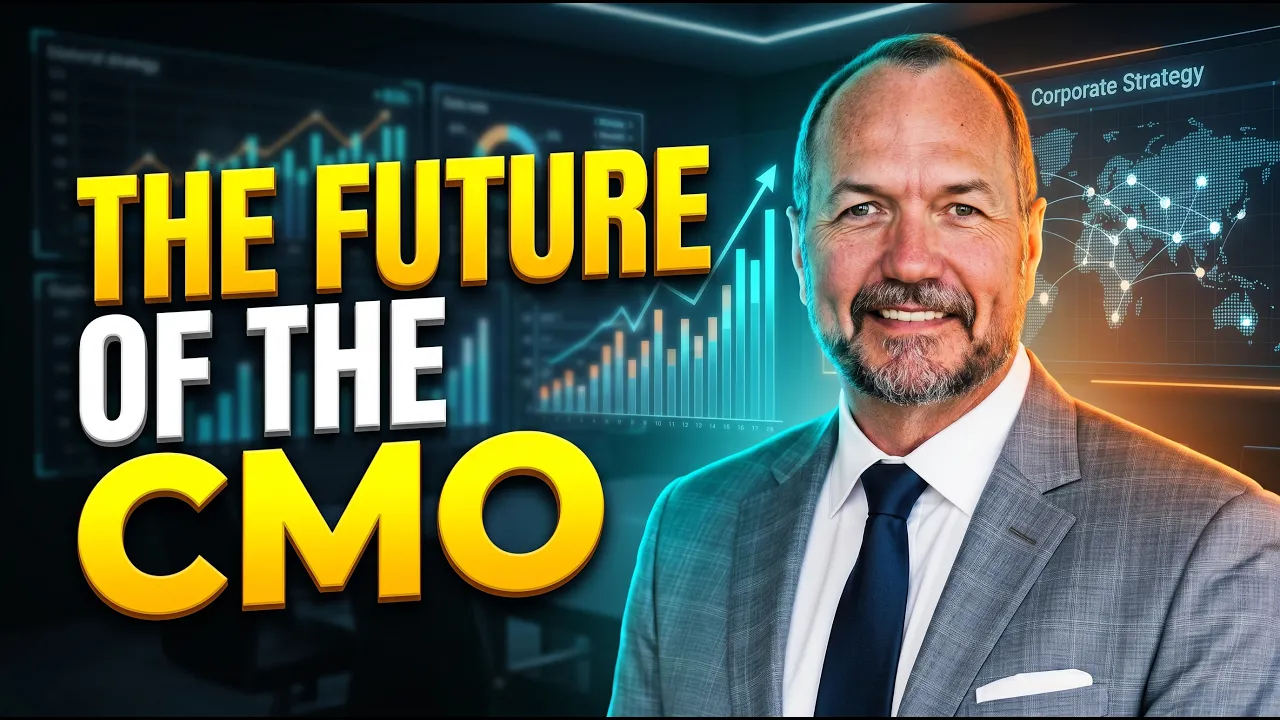
In this episode, Sam Allen — CEO of Iterable and former Global Chief Pipeline Officer at Salesforce — makes the case that the CMO has the hardest job in the C-suite, because marketing's results rarely show up on the timeline that boards and CEOs expect. He explains why so much of what great marketers do resists clean measurement, why you can't fix a pipeline problem in four weeks, and how he keeps his CMO and CRO aligned when quarterly pressure hits. Sam also breaks down how AI is reshaping org design — from hiring for AI proficiency to the middle manager becoming an “outcome manager” who runs a mix of people and agents. Along the way he gets into the marketing buzzwords he can't stand (starting with “persona”), the brands he thinks are marketing well right now, and what changed when he traded a Salesforce business card for a 1,200-customer company.
Episode details
Transcript
Behind the expert
Sam Allen is the CEO of Iterable, the AI-native customer communication platform used by brands like Priceline, Fabletics and Nando’s.
Before Iterable, Sam spent more than a decade at Salesforce, most recently as Executive Vice President and Global Chief Pipeline Officer — a role Marc Benioff created so that one person would wake up every day thinking about the company’s entire $45B+ pipeline across product, sales, marketing and partners. He spent five-plus years at Cisco before that, and started his career as a US Marine Corps officer.
That combination — a career spent owning revenue, now running a martech company that sells to marketers — gives Sam an unusually two-sided view of the brand-versus-performance debate.
In this conversation, Sam explains why the CMO has the hardest job in the C-suite, how he keeps his CMO and CRO aligned under quarterly pressure, and why AI is changing org design faster than any technology shift he’s seen in 30 years in the Valley.
The gist
Marketing always keeps an art to it. The parts that matter most often can’t be tied to hard numbers, which is exactly why CMOs get squeezed.
The core tension is time horizon tied to results. Boards and CEOs expect immediate ROI; brand and top-of-funnel don’t pay back on that timeline.
You can’t fix a pipeline problem in four weeks with marketing dollars. Over-pivoting to save a quarter can cost you long-term.
AI is rewriting org design: hire for AI proficiency at every level, manage outcomes instead of activities, and expect the middle manager to run a mix of people and agents.
Cut the buzzwords. Start with “persona” — for most companies the only two that matter are existing customers and prospects.
From “Chief Pipeline Officer” to CEO
Sam didn’t invent his most famous title — Marc Benioff did. Salesforce had to generate north of $45 billion in pipeline, sourced from product, sales, BDRs, marketing and partners. Each piece had an owner, but no one was looking over the collective whole, and performance started to slip. Benioff doesn’t like vacuums, so he wanted a single person with the breadth and the leadership gravitas to own the entire pipeline picture, build a reporting engine, and drive a culture of inspection. Three people said Sam’s name in a meeting he wasn’t even in. Within 48 hours he had the job.
After more than a decade at Salesforce, two reasons pushed him to look around. Professionally, he felt the technology could move faster and wanted to drive innovation and solve customer problems at a pace large companies rarely allow. Personally, he felt his own growth had slowed — and he never wants to be in a seat where he can solve problems on reputation alone instead of learning. Iterable, a brand he already knew and respected, sat in the martech space he loves, with a clear AI-native thesis and a former Salesforce CMO on its board. The two reasons converged on the CEO seat.
Why the CMO has the hardest job in the C-suite
Asked directly whether the CMO has the hardest job in the C-suite, Sam agreed — and explained why with a comparison. The CFO’s job is hard, but it lives in a spreadsheet you can understand. The salesperson’s job is brutally hard, but it’s black and white: you hit your number or you didn’t. Marketing is more nuanced. A large part of what great marketers do well isn’t cleanly quantifiable, especially in a data-driven world that wants everything attributed.
Underneath that sits the real problem: time horizon tied to results, dramatically exacerbated by AI. Boards and CEOs expect immediate ROI, but a brand campaign has to be in market for a while, and anything at the top of the funnel won’t show return right away. Add uncertainty — what AI does to jobs, companies and customers, plus consumer behavior shifting underneath it all — and a board member reading the Wall Street Journal starts asking why you can’t perform like some other company in a different sector selling to a different customer. CMOs are often not given the platform or airtime to make their case: 25 minutes in a board meeting, then nothing for 90 days.
The CEO–CMO relationship runs on trust and downfield vision
Sam was able to hire his own CMO, Priya Gill, and frames the role less like “advertising and distribution” and more like a general manager of the business. He needs his CMO to keep her head up and look downfield — synthesizing signals from demand gen, from account executives, and from existing customers into feedback that feeds the product roadmap.
That only works on a strong foundation of trust. The CMO has to be unafraid to say “this is going well” and “this is not,” and to flag when the company is over-correcting in one direction. And she has to do all of it at once — pipeline, brand, pricing and packaging, narrative, even re-architecting the website for agent-based search. It isn’t iterative, where you pick one priority for three months. That’s the burden, and it’s why Sam thinks some marketers struggle with the general-manager dimension of the job.
Managing the CMO–CRO tug-of-war
Sam is a believer in healthy friction. When his CMO and CRO clash over lead quality or budget, he lets peers try to solve it first and only leans in when it becomes intractable — and when he does, he starts with root cause. Did marketing fail, or did the team not execute on pipe generation? The answers lead to very different conversations.
The classic version: it’s mid-Q3, a region is going to miss its number, and the CRO wants to yank the CMO’s Q4 event budget to plug the gap right now. Sam’s move is to educate both sides — the CRO usually doesn’t have the context for why a budget was built the way it was — and to find a compromise that doesn’t gut the most important long-term bet. Because, as he puts it, you can’t fix something in four weeks with marketing dollars; there are 100 years of buyer-behavior research that say so.
His sharper tactical point: stop obsessing over creating pipe and pay attention to maturing pipe. A demand-gen campaign won’t have enough time in market to rescue a quarter, but a small, bespoke dinner for a dozen CIOs — a guest speaker, a game — can be stood up quickly, costs little, and actually moves existing pipeline forward.
AI is rewriting org design
Sam’s advice to CMOs (and every leader) starts before org design: rethink org makeup. Hire for AI proficiency as a baseline regardless of the role. At Iterable he tasked his CISO and head of HR with building a tiered AI-proficiency enablement program, because telling people to “go be an AI practitioner” is not the same as teaching them how.
From there, design the org around outcomes rather than specific activities. People get hung up on tasks — “will the agent take my job?” — instead of asking what outcome they’re trying to drive and how AI helps get there. Sam expects the middle-manager role to change most: the word “manager” survives, but it stops meaning “you manage ten people” and starts meaning “you manage outcomes with a mix of people and agents.” Jobs disappear in every technology shift — there are no stenographers, no horse-and-buggy mechanics — but new ones appear too; “prompt writer” didn’t exist two years ago. What’s different this time is the speed. To make all of it stick, he tied the change to a system of accountability, rolling out Benioff’s V2MOM framework at Iterable.
The buzzwords that have to go
Sam’s least favorite word is “persona.” At Salesforce he’d sit in pipeline inspections looking at slides full of cute icons — “this is Susie, she’s an influencer” — and think it was fluff that checked a box without changing behavior. For most companies, and especially smaller ones, the only two personas that matter are existing customers and prospects, inside a clear ICP: make the product sticky for the people you have, and convince the people you want to join your community. Segmentation by industry is fine; elaborate caricatures rarely survive practical application.
His other target is the “everyone is AI-enabled” noise — every billboard on the 101, every potato-chip brand with an AI commercial. The flood creates paradox of choice and makes it harder for customers to decide. And the one term genuinely worth watching isn’t a buzzword at all: AI is upending SEO almost overnight, cratering traffic for thousands of sites and forcing marketers to re-architect for a new kind of search.
Quote snacks
“You can’t always change things in a four-week period when something’s going wrong from a marketing standpoint.”
“Marketing will always have an art to it. It’s never going to be pure science.”
“What’s the outcome you’re trying to drive, and how do you leverage the capabilities to get there?”
“Your job will go away if you don’t learn how to go deep in your domain and leverage AI to make you an expert.”
“You’ve got existing customers and you have prospects. In my mind, those are the two personas you need to worry about.”
“There didn’t used to be a prompt writer two years ago. Now there is.”
Why it matters
The brand-versus-performance fight usually gets framed as a marketing problem. Sam’s vantage point — a former Chief Pipeline Officer now running a martech company — reframes it as a leadership and time-horizon problem. Performance pressure is real and resources are finite, but the instinct to fix everything inside a quarter is exactly what damages the brand work that compounds over years.
AI raises the stakes on both sides. It makes the “show me ROI now” reflex stronger, and it rewards companies that redesign around outcomes and proficiency rather than headcount and activity. The leaders who win will hold the line on long-horizon marketing while moving faster than ever on the things AI genuinely accelerates.
Practical next steps
Give your CMO real airtime. A 25-minute board slot once a quarter isn’t enough platform to defend long-horizon work — build the forum to make the case.
Diagnose root cause before you pivot budget. When marketing and sales clash over a missed number, separate a marketing failure from a pipe-generation execution gap; they call for different responses.
Mature pipe, don’t just create it. When a quarter is short, look for fast, low-cost, high-touch plays on existing pipeline before pouring money into demand gen that can’t pay back in time.
Hire and enable for AI proficiency. Make it a baseline for every role, and teach people how — a tiered enablement program beats a memo telling everyone to “use AI.”
Manage outcomes, not activities. Redesign roles — especially middle management — around outcomes delivered by a mix of people and agents, and anchor it to an accountability system like V2MOM.
Kill the empty buzzwords. Drop elaborate personas for a sharp focus on existing customers and prospects within your ICP, and watch what AI is doing to search before it craters your traffic.
More sharp conversations



The sharpest marketing conversations, straight to your inbox
By providing your contact info, you agree to receive communications from Paramark. You can opt-out at any time. For details, refer to our Privacy Policy