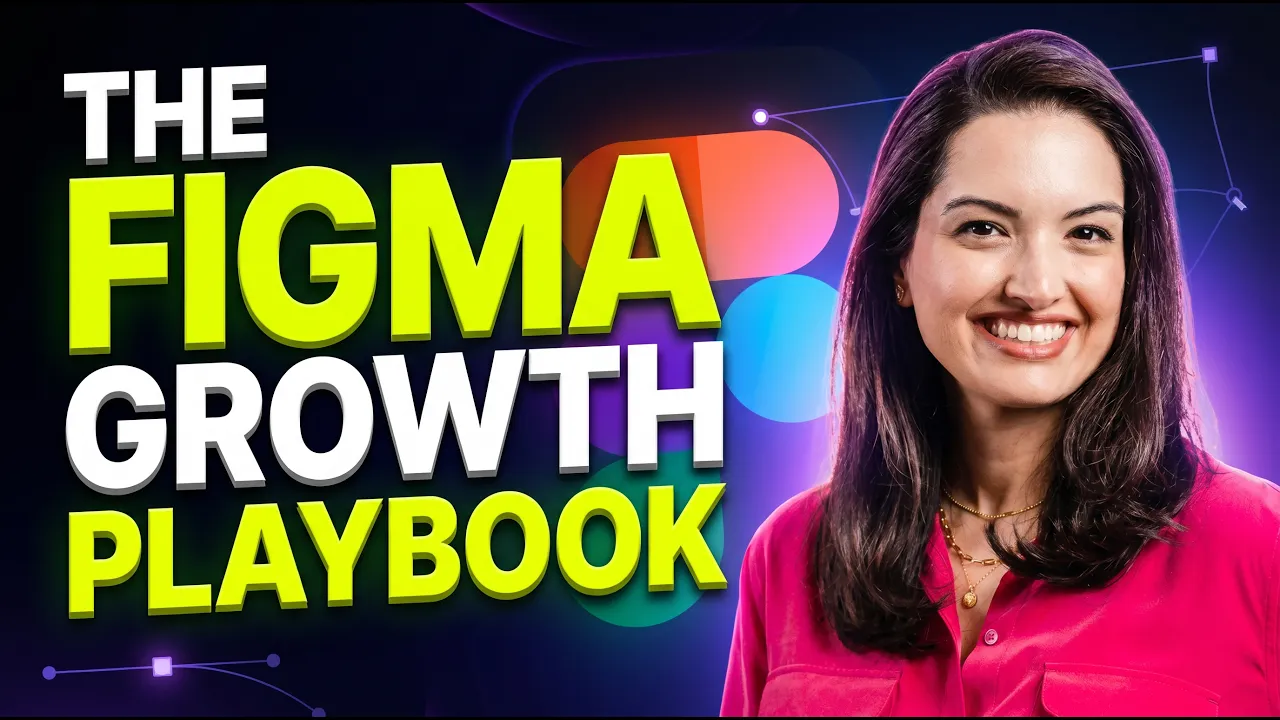

The Brandformance Podcast • Ep 60
How Figma's CMO thinks about community as a channel

In this episode, Sheila Vashee — CMO of Figma and a former marketing leader at Dropbox, Opendoor and Ethos — breaks down how Figma turned its community into its most powerful marketing channel. She argues that great marketing comes down to three things: understanding your audience deeply, finding the channels that uniquely reach them, and building systems to optimize those channels. Sheila explains why brand and performance aren't opposites, how she measures both across short and long time horizons, and shares the Opendoor experiment where a brand campaign doubled market share in three months. She also gets into where AI genuinely helps marketers (and where humans still set the bar), how Figma rebuilt customer support around AI, and why she spends 30–40% of her time hands-on with the latest tools. Along the way: the CEO as the 'real CMO,' Friends of Figma's 240+ volunteer chapters, and the brand she admires most outside tech.
Episode details
Transcript
Behind the expert
Sheila Vashee is the Chief Marketing Officer of Figma, where she leads marketing, communications, brand, growth and customer support. She joined in 2023 and has helped take the company public while expanding its presence across all things design.
Her path to the CMO seat is unusually broad. She started in investment banking at Morgan Stanley, did corporate strategy at Gap, and then moved into tech as an early marketing hire at Dropbox — where she and host Pranav Piyush first worked together more than a decade ago. From there she ran growth at Opendoor and led marketing as CMO at Ethos, building a track record across some of the most category-defining brands of the last fifteen years.
That combination — a finance-trained operator with deep brand instincts — gives Sheila an unusually two-sided view of the brand-versus-performance debate. She is as comfortable talking LTV-to-CAC as she is talking craft, taste and emotion.
In this conversation, Sheila breaks down the three things marketing actually does, why Figma's community has become its most powerful channel, how she proves the value of brand to a board, and where AI genuinely helps marketers — and where humans still set the bar.
The gist
Marketing boils down to three things: understand your audience incredibly well, find the channels that uniquely reach them, and build systems to optimize those channels.
Community is Figma's breakout channel — but what shows up on social is the tip of the iceberg, supported by the whole company listening to users.
Brand and performance aren't opposites. The pendulum always swings; the durable answer is a mix of organic, paid and brand tuned to different time horizons.
Brand can move the business fast when you take big swings. A brand campaign at Opendoor doubled market share in three months in test markets.
AI expands the option space and scales your systems, but humans still make the choices that reach the bar for craft and taste.
The three things marketing actually does
Asked how marketers should educate themselves on the “taste” and psychology side of the job, Sheila reframes the whole discipline as something simpler than it sounds. Marketing, she argues, comes down to three things. First, identify and understand your audience incredibly well — less pop psychology than deep research, listening to calls, and becoming genuinely well-versed in what they care about, because without that the judgment and taste aren't calibrated on the right data set. Second, find the channels and means to reach them that will uniquely connect. Third, build systems to optimize those channels.
She points to her own CEO as proof of where that understanding comes from. Dylan Field has a finely tuned intuition for Figma's core customer that was built over years of listening to and having conversations with users — an extensive internal data set that lets the company build judgment and systems at scale. For Sheila, the implication is clear: taste isn't a gift, it's the output of relentlessly understanding the people you serve.
Why community is Figma's most powerful channel
Figma's community is the channel other companies envy, and Sheila is careful to explain that it extends far beyond the team running the social accounts. It starts with the whole company — engineers, Dylan, the support org — listening across every avenue and feeding what they hear straight into the product roadmap. On top of that sit an advocacy team across design and developers, a community team that supports the 240-plus volunteer Friends of Figma chapters around the world, and a social team that turns all of those touchpoints into the “if you know, you know” content the brand is known for.
The crucial point is what stays invisible. “What you see on social is really the tip of the iceberg,” she says — the visible memes rest on a huge foundation of the whole company connecting with and understanding its users. And none of it was manufactured: it grew organically around the product, nurtured early by Dylan and a team that traveled the world for meetups from India to Nigeria just to hear what users wanted.
Brand and performance aren't opposites
Sheila has run rigorous, quant-heavy performance marketing at Opendoor and Ethos, so she has earned the right to say the brand-versus-performance pendulum is a distraction. It has always swung back and forth — from teams operating like a trading desk to Brian Chesky declaring Airbnb has no performance marketers — and it always comes back to the same three things: who is your user, how do you reach them, and which channels actually break through.
For Figma that means community plus a set of genuinely effective growth channels — SEO, and increasingly Geo — because organic is so strong. On top of that sits a layer of brand, inspiration and emotion that sets the company apart, which matters enormously because Figma's users deliver craft, attention to detail and taste at every stage of their own work. The company has to reflect that back to them, which raises the bar on its own creative execution.
The Opendoor experiment: how to prove brand
The hardest perennial fight in marketing is showing the value of brand, and Sheila has the cleanest proof point most marketers will ever hear. Back at Opendoor — a market-based business that lent itself to controlled tests — the team ran a brand campaign in a few markets, held out control markets, and looked at market share alongside ROI and revenue. Market share doubled in three months in some of the test markets.
“That proved the case more than any test could,” she says. The lesson isn't just that brand works; it's that you can move market share quickly when you take big swings. Operate only at the margins and short-term impact is nearly impossible to show; take a real swing and you can produce a result that is, in her word, incontrovertible — and from there it becomes far easier to scale that kind of work.
Measuring brand across time horizons
Sheila doesn't use one framework for all spend; she uses different measures on different time horizons, all of which ultimately have to drive the business. Short-horizon channels get judged on immediate payback — things like LTV-to-CAC across a handful of channels. Long-horizon work gets judged on awareness, sentiment and market share across new audiences expected to expand over time.
In practice that means deep bi-annual brand surveys covering likelihood to recommend, brand love, perception and sentiment, layered with always-on pulse tracking of CSAT, NPS, awareness and brand love by audience. Tracking those continuously lets the team tie specific launches and messages to movement in the longer-term metrics — effectively reading what is moving the needle in the short term on numbers that only pay back over the long term.
Where AI helps marketers — and where it doesn't
Sheila splits AI's impact into two buckets. On the creative side, AI helps you explore the option space far more quickly — content generation and early creative exploration — but that speed doesn't always lead to the best work. Once the option space is expanded, people still have to riff, refine and exercise the judgment that elevates work to Figma's bar for craft and taste. On the systems side she is more unreservedly excited: sharing updates, skills and sales training across the team through AI is a force multiplier the company is rolling out immediately.
The clearest transformation has been in support, which Sheila also owns. The team rethought the entire journey around AI, building a chatbot that takes the first pass at questions while always keeping humans available when needed — and having support under the same roof as marketing gives her end-to-end visibility from the first marketing touch to the last support interaction. She practices what she preaches, too: she estimates she spends 30 to 40 percent of her time hands-on with the latest tools, calling it “completely non-negotiable” for a modern marketing leader.
Quote snacks
“The most critical things that marketing does — it's actually pretty simple: identify and understand your audience incredibly well.”
“Market share doubled in three months in some of our test markets. That proved the case more than any test could.”
“What you see on social is really the tip of the iceberg.”
“AI helps you explore the option space much more quickly — but that doesn't always lead to the best work.”
“You've got to give yourself the room to place some bets to figure out the step change that's going to drive your go-to-market.”
“This is the future. It's completely non-negotiable. You have to know the latest of what's happening.”
Why it matters
The brand-versus-performance debate usually gets argued as an either/or. Sheila's vantage point — a finance-trained, performance-fluent marketer now running brand, growth, comms and support at a public company — reframes it as a portfolio problem across time horizons. The job isn't to pick a side; it's to understand your audience well enough to know which channels break through, then fund both the work that pays back this quarter and the work that compounds over years.
Her community thesis raises the stakes further. The most durable channel Figma has wasn't bought — it was earned by listening, and it is sustained by the entire company, not a social team. In an AI era where option spaces are infinite and everyone can generate content instantly, the marketers who win will be the ones with the taste to choose well and the audience understanding to know what will actually connect.
Practical next steps
Start with the three things. Before debating tactics, get honest about whether you truly understand your audience, have found the channels that uniquely reach them, and have built systems to optimize those channels.
Treat community as a company-wide effort. The visible social content is the tip of the iceberg — build the listening, advocacy and support muscle underneath it before expecting memes to land.
Prove brand with a controlled swing. When you need to show brand's value, run a real campaign in test markets against held-out controls and measure market share — a big swing produces a result no marginal test can.
More sharp conversations


The sharpest marketing conversations, straight to your inbox
By providing your contact info, you agree to receive communications from Paramark. You can opt-out at any time. For details, refer to our Privacy Policy