
The Brandformance Podcast • Ep 54
How to talk about AI when your audience doesn't really care about AI

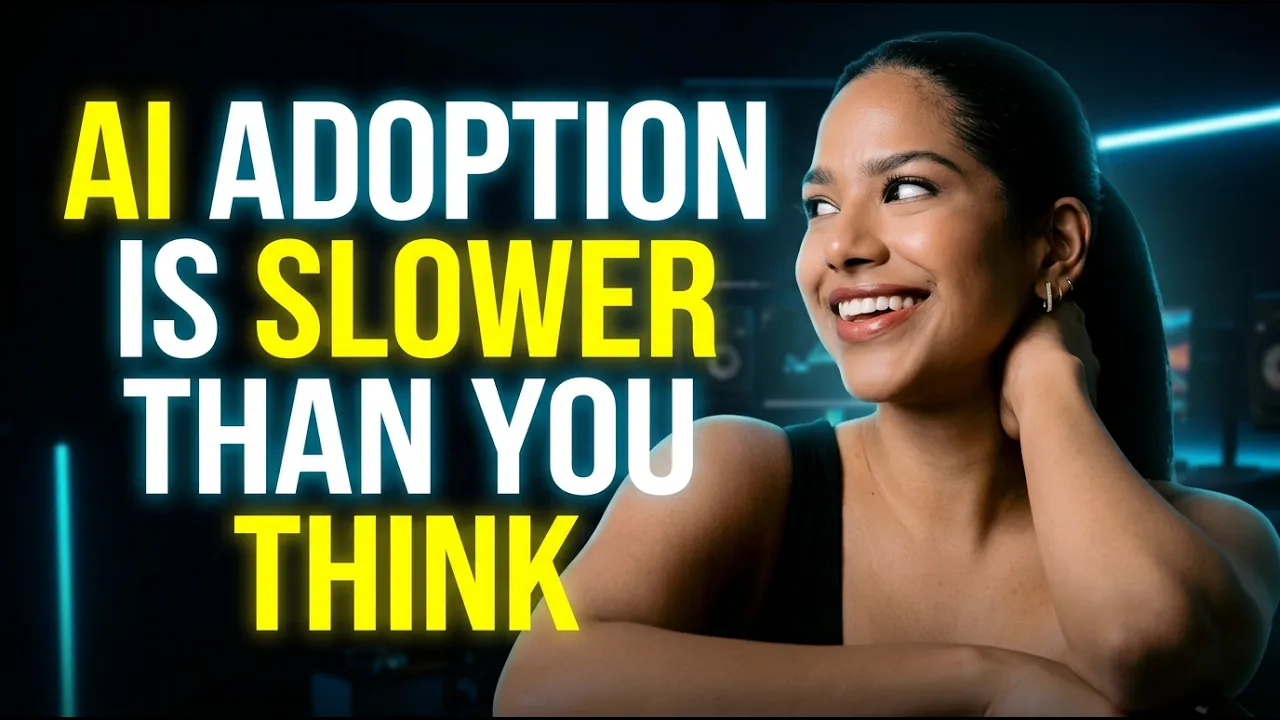
In this episode, Samyutha Reddy shares what it was actually like to build messaging for a brand new category during the early days of generative AI at Jasper, including how the whole narrative had to change once ChatGPT showed up. She also gets into why press coverage has less to do with reporter relationships than most people think, why you can only really move the needle on one audience at a time, and what she got wrong about how fast enterprise would actually adopt AI.
Episode details
Transcript
Behind the expert
Samyutha Reddy, communications leader at Lovable, has had a front-row seat to some of the biggest shifts in AI marketing.
She joined Jasper before the company raised its Series A, helped lead enterprise marketing, comms, product marketing, and growth, and saw firsthand what happens when a category goes from “new and magical” to “crowded and enterprise-grade.”
Now, she leads comms at Lovable and advises startups and consumer technology companies on AI messaging, comms strategy, and how to build trust when everyone is trying to sound smart about AI.
In this conversation, Samyutha breaks down why press is harder than founders think, why founder-led distribution is no longer optional, and why the strongest AI narrative starts with one audience and one behavior shift.
The gist
Most AI messaging fails because it tries to speak to everyone at once.
Press is not a reward for effort. It’s earned through substance, timing, and a sharp POV.
Founder-led marketing is not a side quest. It’s part of the marketing machine.
B2B companies need to learn from consumer brands. High-priced software still deserves high-effort creative.
Comms measurement needs both qualitative judgment and quantitative tracking.
Samyutha’s view: Pick your audience before you pick your AI story
Samyutha’s AI marketing experience started at Jasper, before ChatGPT became the default mental model for generative AI. At first, Jasper was helping marketers understand a new behavior: creating content with AI. Then the market changed. General-purpose tools arrived. Free became the competitor. The story had to shift.
The old message was about behavior change. The new one had to be about enterprise trust: security, indemnity, budgets, and outcomes.
That’s the point Samyutha keeps coming back to. AI messaging is not about sprinkling “AI” or “agents” across your website. It’s about deciding who you’re trying to move right now.
Customers, investors, and AI engineers don’t care about the same things. They don’t respond to the same language. They don’t need the same proof.
Her advice is simple: pick one primary audience and one secondary audience. Then decide what behavior you want to shift.
Are you trying to get customers to switch from a competitor? Create a new budget line? Convince AI engineers that your roadmap is more innovative than the rest? Those are different comms strategies. Trying to do all three at once makes the story mushy.
Why “press” is not what most founders think it is
Founders still misunderstand press.
Samyutha said many founders assume coverage is tied to effort, revenue, funding size, or reporter relationships. But the media game has changed. A funding round isn’t enough. A warm relationship isn’t enough. Even impressive growth isn’t always enough.
Reporters have beats. They’re covering a larger narrative. The question isn’t, “Can you cover our announcement?” The question is, “Why does this matter in the story you’re already telling?”
That’s why Samyutha pointed to Anthropic and Clay as examples.
Anthropic named the bigger fight well: it’s about how society should move into an AI-shaped future. Clay, meanwhile, backs its story with substance: real ARR, real demand, and even employee liquidity.
The lesson: a strong comms strategy needs more than noise. It needs evidence.
Comms measurement isn’t just counting mentions
Samyutha pushed back on the old PR agency model: pay a monthly retainer, count mentions, celebrate podcast bookings, then fire the agency three months later because the business impact is unclear.
That volume game misses the real work.
For her, strong comms measurement starts with qualitative questions:
Is the reporter using your framing?
Are they quoting you directly?
Are they treating you as an expert?
Are you showing up in the right category narrative?
Are you mentioned alongside the companies you want to be compared with?
Pranav added the Paramark view: track earned media like a real channel.
Organic social, PR, podcast appearances, founder LinkedIn impressions, Reddit visibility, AEO, GEO, and LLM mentions are all part of earned media. If you can measure reach over time, you can start to understand how those spikes correlate with traffic, leads, signups, or pipeline.
The qualitative work shapes the narrative. The quantitative work helps prove whether the narrative is moving the business.
Founder-led marketing is real work
One of the sharper moments in the conversation came when Samyutha talked about leaders who dismiss personal brand work.
She described hearing a CEO criticize a marketing leader for going on too many podcasts and building too much personal visibility. Her reaction: that’s part of the marketing machine.
In a world where software is easier to build and words are cheaper to publish, distribution matters more. The founder or executive who can explain the company’s POV clearly has a real advantage.
Pranav put it bluntly: AI lowered the barrier to building. That means your distribution needs to be much better from day one.
The B2B playbook needs more consumer-grade effort
Samyutha also called out a strange B2B habit: companies selling six-figure software often tolerate low-effort creative.
A luxury brand would never treat creative like an afterthought. But enterprise software companies will spend heavily on billboards, events, and media while running forgettable campaigns.
Her point isn’t that B2B needs to become B2C. It’s that B2B buyers are still people. They notice craft. They respond to clarity. They can tell when a campaign was finished properly versus shipped because a deadline arrived.
High-priced products need high-effort marketing.
Quote snacks
“Everything is really centering around substance.”
“Press and PR can still be very, very powerful. You just have to invest the right time and energy in it.”
“You’re really only able to talk to one primary audience and one secondary audience at a time.”
“Buying the product is sort of the downstream impact of landing the narrative.”
“The hardest part is getting people to care about it.”
“It’s never been easier to build software. It’s also never been harder to stand out.”
Why it matters
AI has made messaging more important, not less.
When every company can claim it uses AI, the words stop doing the work. Customers want to know whether the product solves their problem. Investors want to know whether the company can own a market. Engineers want to know whether the mission and technical challenge are worth joining.
Those require different stories.
The same is true for comms measurement. Counting mentions is comforting, but it’s not enough. Ignoring measurement because comms is “qualitative” is also a cop-out.
The better answer is both: know whether the narrative is landing, then track whether earned media is creating measurable business movement over time.
Practical next steps
Pick one primary audience for your next comms push. Customers, investors, talent, or the broader category. Don’t try to move all of them at once.
Define the behavior shift. Switching vendors, creating budget, trusting AI in a sensitive workflow, or joining the company all require different stories.
Stop leading with “AI” unless your audience actually cares. Use the words your customers use.
Audit your earned media. Track founder social reach, PR reach, podcast appearances, Reddit visibility, and LLM/AEO visibility the same way you’d track other marketing inputs.
Measure narrative quality. Look at whether your framing is repeated, whether you’re quoted as an expert, and who you’re mentioned alongside.
Bring more consumer-grade craft into B2B. If your product costs six figures, your creative shouldn’t feel like an afterthought.
More sharp conversations



The sharpest marketing conversations, straight to your inbox
By providing your contact info, you agree to receive communications from Paramark. You can opt-out at any time. For details, refer to our Privacy Policy